

National Youth Day 2026 – Spirit, Vision, and Responsibility of Young India
There is something incredibly powerful about the energy of youth—an energy that does not merely seek change but demands it; an energy that questions the old, breaks through limitations, and builds the impossible out of the ordinary. Every year on January 12, India celebrates this force of transformation as National Youth Day, the birth anniversary of Swami Vivekananda, one of the greatest philosophers and reformers in Indian history.

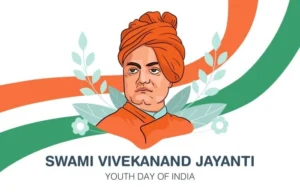
But National Youth Day 2026 is not just another date on the calendar.
It is a reminder, a wake-up call, and a celebration all at once.
It comes at a time when young India is standing at a crossroads—facing unprecedented challenges yet possessing extraordinary opportunities.
This is a time when technology is evolving faster than human habits, when careers are shifting overnight, when social media is shaping identities, and when the pressure to “succeed early” has replaced the desire to grow slowly.
Yet, it is also a time when young people are building million-dollar startups from garages, creating global influence through content, cracking international innovation competitions, leading climate movements, and redefining what it means to be Indian in the global arena.
National Youth Day 2026, therefore, is more than a commemoration—it is an invitation to reflect, re-energize, and reimagine the India we are building through the dreams of our youth.
I. The Origin: Why India Celebrates National Youth Day
The Government of India declared January 12 as National Youth Day in 1984, and since 1985, it has been celebrated every year across schools, colleges, organisations, universities, and communities.
Why?
The answer lies in the unparalleled personality and philosophy of Swami Vivekananda—a monk who was young, vibrant, fearless, deeply intellectual, and profoundly spiritual. He believed that youth are not only the backbone of a nation but also the torchbearers of its destiny.
One of his most iconic quotes captures the essence of the entire celebration:
“Arise, awake, and stop not till the goal is reached.”
This wasn’t just motivation—it was a blueprint.
Vivekananda wanted the youth to be fearless, disciplined, and driven, but also compassionate, spiritually grounded, and socially responsible.
His message was simple yet revolutionary:
Education must create strength, not stress.
Character must be valued more than certificates.
Service must be given more importance than selfish ambition.
These teachings are not only relevant today—they are essential.
II. National Youth Day 2026: Why It Matters More Today Than Ever
In 2026, the world is not the same as it was even five years ago. The modern youth is living in a world of contradictions—connected yet lonely, informed yet confused, ambitious yet anxious.
The themes around National Youth Day 2026 emphasize:
-
Self-reliance (Atmanirbharta)
-
Digital empowerment
-
Mental and emotional resilience
-
Skill development
-
Entrepreneurial mindset
-
Social responsibility
-
Cultural awareness
The relevance of these themes is evident everywhere—schools, colleges, workplaces, and social spaces. Youth are not simply preparing for a future; they are shaping it.
III. The Challenges Modern Youth Face in 2026
Let’s talk honestly.
Today’s youth are not struggling because they are weak; they are struggling because the world has changed faster than systems, schools, and societies can understand.
1. Academic Pressure & Mental Health
Education is now a race.
Marks, ranks, cut-offs, coaching centres—everything revolves around achievement.
But is success really about a number on a sheet?
In 2026, academic stress remains a leading cause of anxiety and emotional burnout. Many students silently battle fear of failure, comparison, and societal expectations.
2. Technology Overload
Smartphones were supposed to make life easier.
But they’ve made attention spans shorter, emotions unstable, and comparisons constant.
Social media often creates illusions:
-
Perfect bodies
-
Perfect relationships
-
Perfect careers
But life is never perfect—and that realization often comes too late.
3. Uncertainty in Career Paths
The world of work has become unpredictable:
-
Traditional jobs are disappearing
-
AI is automating routine work
-
New professions are emerging every year
Students often feel lost, confused, and pressured to choose a career before they even understand themselves.
4. Identity Crisis & Social Expectations
Young people struggle with:
-
Who they are
-
What they want
-
Where they fit in
Society wants them to be confident, yet labeled them “irresponsible”.
Parents want them to be successful, yet rarely understand their journey.
Friends want them to be cool, yet judge their choices.
This conflict is real and painful.
IV. The Opportunities of 2026: A New Era for Youth
Despite challenges, there has never been a better time to be young in India.
1. Startup Culture & Entrepreneurship
India is one of the fastest-growing startup ecosystems in the world.
In 2026, young founders are building:
-
Apps
-
Fintech solutions
-
Health-tech innovations
-
AI-driven tools
-
Ed-tech platforms
-
Green-tech solutions
A laptop and an idea can create a global impact.
2. Digital Economy & Global Freelancing
Youth are earning through:
-
Content creation
-
Digital marketing
-
Coding
-
UI/UX design
-
Freelancing platforms
-
Online consulting
Skill has become a new currency.
3. Global Education Access
Through online courses, global certifications, and remote internships, students can learn from anywhere at minimal cost.
Harvard, MIT, Google, and others offer learning opportunities your grandparents never imagined.
4. Leadership in Social Change
From climate awareness to gender equality, youth movements are forcing governments to act.
Young people are no longer silent spectators—they are catalysts for change.
V. Swami Vivekananda’s Teachings Applied to 2026 Youth
Swami Vivekananda’s teachings hold solutions to many modern problems.
1. Self-Confidence
He told youth to believe in themselves before believing in any external force.
“You cannot believe in God until you believe in yourself.”
This message is priceless today when self-doubt is rising.
2. Strength—Physical, Mental, and Moral
He emphasized:
-
Fitness
-
Discipline
-
Focus
-
Emotional balance
-
Moral courage
In 2026, when life is mentally demanding, this strength is essential.
3. Service & Social Responsibility
Vivekananda believed service to others is the highest form of worship.
Youth today must understand that:
Success without purpose is empty.
Growth without compassion is incomplete.
VI. Government & National Youth Initiatives in India
India has several programs dedicated to youth development:
1. National Youth Festival
Celebrated around January 12 every year with:
-
Cultural events
-
Workshops
-
Speeches
-
Debates
-
Youth conventions
2. Skill India Mission
Aims to equip youth with practical skills in:
-
Technology
-
Digital tools
-
Manufacturing
-
Entrepreneurship
-
Trades and services
3. Startup India Initiative
Encourages and funds youth-led innovations.
4. Digital India
Makes technology accessible to every citizen.
5. National Service Scheme (NSS)
Builds social responsibility and leadership.
6. Nehru Yuva Kendra Sangathan (NYKS)
Empowers rural youth through training and community programs.
These initiatives together create opportunities for growth no previous generation had.
VII. Real Stories of Young Change-Makers in India
To understand youth power, we must look at real examples.
1. The Teen Innovator from Karnataka
A 17-year-old student developed a low-cost device for farmers to monitor soil health using AI. His invention is now used in several villages.
2. The Climate Activist from Assam
A young girl started a tree-planting movement in her hometown. What began as a school project is now a statewide initiative.
3. The Social Entrepreneur from Delhi
At 24, she launched an organization that trains underprivileged women in digital skills. More than 10,000 women have been empowered.
These stories remind us that extraordinary change often begins with a simple idea and strong intention.
VIII. What Today’s Youth Must Focus On
To shape a strong future, the youth of 2026 must build themselves from within.
1. Self-Discipline
Motivation fades; discipline wins.
Small habits lead to big achievements.
2. Skill Development
Degrees are useful, but skills are powerful.
Learn:
-
Communication
-
Thinking
-
Coding
-
Creativity
-
Problem-solving
3. Time Management
Control your hours or your hours will control you.
4. Emotional Strength
Learn to handle:
-
Anxiety
-
Stress
-
Rejection
-
Failure
These are stepping stones, not obstacles.
5. Purpose & Values
Know why you do what you do.
Purpose gives direction; values give stability.
IX. A Vision of Youth-Led India in 2030 and Beyond
Imagine an India where youth are:
-
Innovators
-
Entrepreneurs
-
Leaders
-
Creators
-
Researchers
-
Change-makers
An India that is digital yet rooted.
Modern yet moral.
Global yet proudly Indian.
If the youth rise with focus and unity, India’s future will not just be bright—it will be revolutionary.
Conclusion: A Call to Action
As National Youth Day 2026 arrives, every young person must ask themselves:
Am I living up to my potential?
Am I building myself?
Am I contributing to society?
Am I making choices that my future self will thank me for?
Remember, the greatest strength of a nation is not in its wealth, weapons, or technology.
Its greatest strength is its youth—their ideas, passion, values, and courage.
Swami Vivekananda’s voice echoes across generations:
“Take risks in your life. If you win, you can lead. If you lose, you can guide.”
Let 2026 be the year the youth of India rise not only for themselves but for the nation and the world.