

Iran Army – Structure, Strength, Weapons, Strategy, and Modernization
Introduction
When analysts discuss military power in the Middle East, Iran inevitably becomes a focal point—sometimes misunderstood, often underestimated, and almost always influential. The Islamic Republic of Iran occupies a strategic geopolitical position, sharing borders with Iraq, Turkey, Afghanistan, Pakistan, Armenia, and Azerbaijan. It also commands coastline along the Persian Gulf, Strait of Hormuz, and the Gulf of Oman—three of the most crucial waterways for global energy supply.

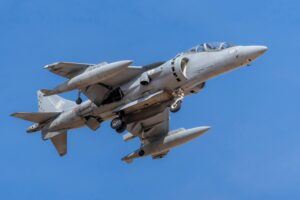
Iran’s military power is not just about conventional strength. It is a complex blend of history, ideology, geographical necessity, sanctions-driven innovation, and strategic patience. While Iran’s military industry and weapon systems may not match Western or Russian sophistication, its asymmetric capabilities, missile arsenal, drone technology, and proxy alliances have made it one of the most formidable forces in the region.
This article dives deeply into Iran’s military structure, legacy, weapon systems, strategies, and modernization efforts—exploring how an isolated nation developed one of the world’s most unconventional and influential military doctrines.
Historical Evolution of Iran’s Military
1. Pre-Revolution Era (Before 1979)
Before the Islamic Revolution, Iran was a close ally of the United States and a key pillar of Western influence in the Middle East. Under the Shah, Iran was equipped with advanced Western weapons:
-
F-14 Tomcats
-
F-4 Phantom IIs
-
M60 tanks
-
Cutting-edge radar systems
-
American and British-trained officers
The Shah envisioned Iran as a regional superpower, and the country spent heavily to modernize its forces. Defense cooperation with the US, UK, and Israel was extensive.
However, this created a fundamental vulnerability: Iran became heavily dependent on foreign suppliers, and when the revolution occurred in 1979, that support evaporated overnight.
2. Post-Revolution Restructuring
After 1979, the newly formed Islamic Republic distrusted the old military establishment, considering it loyal to the Shah. This distrust led to:
-
Purges of senior officers
-
Weakening of centralized command
-
Reorganization of the military intelligence system
The new leadership also created the Islamic Revolutionary Guard Corps (IRGC) as a parallel force to safeguard the revolution. This dual-system created redundancy but also ensured ideological loyalty.
3. The Iran–Iraq War (1980–1988) and Its Impact on Military Doctrine
The Iran–Iraq War was one of the longest and most brutal conflicts of the 20th century. Iran faced:
-
International isolation
-
Shortage of spare parts
-
Limited access to new weapons
-
An Iraqi military supported by the US, USSR, and Arab states
Instead of collapsing, Iran adapted by:
-
Developing self-reliant weapons manufacturing
-
Emphasizing mass mobilization
-
Creating asymmetric warfare strategies
-
Expanding missile and drone programs
The war instilled one crucial principle that still defines Iranian doctrine:
“Iran cannot rely on foreign powers for security—self-sufficiency is essential.”
Iran’s Dual Military Structure
Iran’s military is divided into two major forces with distinct responsibilities, command structures, and ideologies.
1. Artesh (Regular Army)
The Artesh is Iran’s traditional, conventional armed force responsible for territorial defense.
Branches of Artesh
-
Ground Forces
-
Air Force
-
Navy
-
Air Defense Force
Roles
-
Border protection
-
Ground operations
-
Defense against foreign invasion
-
Naval operations in the Gulf of Oman and beyond
Leadership
-
Professional military officers
-
More traditional and less ideological
-
Focused on defense rather than foreign operations
The Artesh operates like a traditional national army, with structured training, hierarchy, and conventional operations.
2. Islamic Revolutionary Guard Corps (IRGC)
Formed in 1979 to protect the Islamic Revolution, the IRGC is a unique institution with both military and political influence.
Key Responsibilities
-
Protecting the Islamic regime internally and externally
-
Managing Iran’s missile program
-
Overseeing Iran’s drone forces
-
Directing extraterritorial operations through Quds Force
-
Controlling strategic sectors of the economy
The IRGC often receives priority funding and oversees the most advanced weapons programs.
3. Differences Between Artesh and IRGC
| Feature | Artesh | IRGC |
|---|---|---|
| Purpose | Conventional defense | Protect revolution & expand influence |
| Focus | National borders | Regional power projection |
| Weapons | Traditional systems | Missiles, drones, cyber, naval swarms |
| Leadership | Professional officers | Ideologically driven commanders |
| Operations | Defensive | Offensive/asymmetric |
This dual structure gives Iran a hybrid military—part conventional, part ideological, and highly adaptive.
Ground Forces
Iran’s ground forces are among the largest in the region.
1. Size and Organization
-
Approximately 350,000 active personnel
-
Hundreds of thousands of reservists
-
Divided into infantry, armor, artillery, and special forces units
2. Major Weapon Systems
Tanks
-
Zulfiqar
-
Iran’s first indigenous tank
-
Based on a mix of American M60 and Soviet designs
-
-
T-72 Upgrades
-
Upgraded fire control
-
Reactive armor
-
Improved targeting systems
-
-
Karrar
-
Iran’s most modern tank
-
Includes modern optics and reactive armor
-
Designed to reduce reliance on foreign imports
-
Armored Vehicles
Iran produces:
-
Boragh armored personnel carriers
-
Safir tactical vehicles
-
Upgraded BMP series
Artillery and Rocket Systems
-
122mm and 155mm artillery units
-
Fajr-3 and Fajr-5 rocket artillery
-
Long-range precision rockets
Iran has built a ground force capable of mass mobilization, defensive depth, and asymmetric resistance.
Air Force
The Iranian Air Force is a blend of outdated platforms and innovative adaptations.
1. Aircraft Inventory
Iran still operates a mix of Cold War-era fighters:
-
F-4 Phantom
-
F-5 Tiger
-
F-14 Tomcat
-
MiG-29
-
Su-22
Due to sanctions, Iran relies heavily on:
-
Reverse engineering
-
Spare parts cannibalization
-
Domestic upgrades
-
Iran Weapons and Missiles

2. Indigenous Fighter Projects
Iran has attempted to manufacture local fighters:
-
Azarakhsh
-
Saeqeh
-
Kowsar
Most are based on older US F-5 designs with updated avionics. While not cutting-edge, they showcase Iran’s attempt at self-reliance.
3. Drone & UAV Warfare
This is where Iran excels.
Iran operates:
-
Shahed-136 (kamikaze drone)
-
Mohajer-6
-
Ababil series
-
Karrar jet-powered UAV
-
Fotros long-endurance UAV
Iranian drones are:
-
Low-cost
-
Long-range
-
Effective for reconnaissance and strike missions
These systems have been used in conflicts across:
-
Syria
-
Iraq
-
Yemen
-
The Red Sea
Drones have become Iran’s signature military capability.
4. Air Defense Systems
Iran has built one of the densest air defense networks in the region, including:
-
Bavar-373 (Iran’s equivalent of S-300/S-400)
-
Khordad-3 and Khordad-15
-
Sayyad missile series
-
Talash and Raad systems
-
Locally upgraded radar arrays
Iran’s air defense strategy focuses on:
-
Layered coverage
-
Distributed radar networks
-
Mobile launchers
-
Passive sensors
This makes it difficult for enemies to conduct surprise attacks.
Navy
Iran’s naval forces are divided between the Artesh Navy and the IRGC Navy.
1. Artesh Navy
Focuses on:
-
Gulf of Oman
-
Arabian Sea
-
Indian Ocean routes
It operates:
-
Frigates
-
Corvettes
-
Support ships
-
Submarines (mainly Ghadir-class mini subs)
2. IRGC Navy
Focused on asymmetric operations in the restricted waters of the Persian Gulf and Strait of Hormuz.
Capabilities include:
-
Fast attack craft
-
Missile boats
-
Sea mines
-
Torpedoes
-
Swarm tactics
The IRGC Navy is designed to harass larger naval forces and disrupt maritime traffic if necessary.
3. Strategic Importance of the Strait of Hormuz
Iran’s control over the Strait of Hormuz gives it geopolitical leverage, as one-third of global seaborne oil passes through this chokepoint.
Iran’s ability to:
-
Plant mines
-
Launch anti-ship missiles
-
Deploy drones
-
Use fast boats
…allows it to challenge even technologically superior navies.
Missile Program
Iran’s missile program is arguably its most powerful deterrent.
1. Short-Range Missiles
Examples:
-
Fateh-110
-
Zolfaghar
-
Dezful
These provide tactical battlefield capability.
2. Medium-Range Missiles
-
Shahab-3
-
Ghadr
-
Emad
Ranges of 1,000–2,000 km allow Iran to strike targets across the Middle East.
3. Long-Range & Hypersonic Developments
Iran claims advancements in:
-
Hypersonic missile technology
-
Longer-range systems
-
Satellite-guided precision missiles
While exact capabilities are debated, the regional impact is undeniable.
4. Cruise Missiles
-
Soumar
-
Hoveyzeh
-
Ya-Ali
These low-altitude missiles strengthen Iran’s deep-strike capabilities.
Strategic Doctrine
Iran views missiles as essential because:
-
It lacks a modern air force
-
Missiles are cheaper and harder to intercept
-
They serve as a deterrent to regional adversaries
Drone & UAV Systems
Iranian drones have reshaped modern asymmetric warfare.
Key Systems
Shahed-136
-
Long-range
-
Low-cost
-
Difficult to detect
Mohajer-6
-
Multi-role
-
ISR + strike capability
Ababil Series
-
Reconnaissance
-
Targeting
-
Suicide drones
Influence on Modern Conflicts
Iranian drones have been used extensively in:
-
Yemen by the Houthis
-
Syria by Iranian-backed militias
-
Iraq by PMF groups
-
Lebanon by Hezbollah
Their presence has influenced the tactics of regional and global militaries.
Cyber & Electronic Warfare
Iran has significantly developed cyber capabilities.
1. Cyber Units
Iran operates state-linked cyber groups responsible for:
-
Cyber espionage
-
Attacks on infrastructure
-
Information warfare
2. Notable Operations
Iran has been linked to:
-
Attacks on foreign oil companies
-
Disruptions of critical infrastructure in rival states
-
Defensive cyber operations protecting its nuclear program
Cyber warfare allows Iran to project power beyond its borders without direct confrontation.
Defense Industry & Indigenous Production
Iran’s defense industry grew out of necessity.
1. Impact of Sanctions
Sanctions forced Iran to:
-
Reverse engineer Western weapons
-
Partner with Russia, China, and North Korea
-
Develop hybrid weapons using mixed technology
2. Key Sectors
Iran now produces:
-
Tanks
-
Missiles
-
UAVs
-
Naval boats
-
Electronic warfare systems
-
Small arms
-
Armored vehicles
3. Innovations
Iran’s greatest innovation has been low-cost weapon systems that deliver high strategic value.
Strategy & Military Doctrine
Iran’s doctrine is shaped by geography, ideology, and necessity.
1. Asymmetric Warfare
Iran knows it cannot defeat advanced militaries through direct confrontation. Instead, it uses:
-
Swarm tactics
-
Missiles
-
Drones
-
Cyber warfare
-
Proxy forces
2. Proxy Network
The Quds Force coordinates allies across:
-
Iraq
-
Syria
-
Lebanon
-
Yemen
-
Gaza
These groups expand Iran’s influence without requiring large troop deployments.
3. Defense in Depth
Iran expects any war to be prolonged and fought across multiple layers:
-
Frontline forces
-
Reserve mobilization
-
Urban warfare
-
Mountain defenses
This makes Iran difficult to invade or control.
Strengths & Weaknesses
Strengths
-
Large, mobilizable force
-
Advanced drone and missile programs
-
Dense air defense network
-
Strategic geography
-
Strong asymmetric capability
-
Experienced proxy network
Weaknesses
-
Outdated air force
-
Economic limitations
-
Limited blue-water naval capabilities
-
Technological gaps
-
Heavy reliance on homemade equipment
Future Outlook
Iran’s military future depends on:
1. Modernization Goals
-
Upgrading air force
-
Expanding missile precision
-
Improving naval capabilities
-
Increasing drone autonomy
2. New Technologies
Iran is investing in:
-
Artificial intelligence in drones
-
Hypersonic missile research
-
Cyber command development
-
Electronic warfare systems
3. Predictions for the Next Decade
Iran will likely:
-
Strengthen its defensive network
-
Continue regional influence through proxies
-
Focus on missile/drone superiority over aircraft
-
Seek selective alliances with Russia and China
Conclusion
Iran’s military, shaped by revolution, war, sanctions, and geography, has evolved into one of the most unconventional and resilient forces in the world. Though it lacks the advanced weaponry of Western or Russian powers, its mix of missiles, drones, cyber capabilities, and asymmetric strategy has made it a formidable regional player.
Understanding Iran’s military strength requires seeing beyond conventional metrics. It is a force built not on advanced technology alone, but on adaptability, ideological motivation, and strategic patience—qualities that continue to redefine power dynamics in the Middle East.