
Guru Tegh Bahadur Sahib Ji: Biography, Teachings, and Martyrdom of Hind Di Chadar
Guru Tegh Bahadur Sahib Ji: The Shield of Humanity and Beacon of Courage
Guru Tegh Bahadur Sahib Ji stands as one of the most revered figures in Indian history—a spiritual leader, a fearless protector, and a symbol of unwavering faith. As the ninth Sikh Guru, his life and martyrdom continue to inspire millions across the world. His legacy is not just about religious devotion but about the universal values of justice, compassion, and sacrifice for the greater good. This article explores the extraordinary journey of Guru Tegh Bahadur Sahib Ji, his teachings, and the timeless impact of his sacrifice.
Early Life and Spiritual Formation
Guru Tegh Bahadur Sahib Ji was born Tyag Mal on April 1, 1621, in Amritsar, Punjab. He was the youngest son of Guru Hargobind Sahib Ji, the sixth Sikh Guru, and Mata Nanaki Ji. From a young age, he was immersed in the teachings of Sikhism, learning the values of humility, service, and courage. His upbringing was marked by rigorous spiritual and martial training, reflecting the Sikh philosophy of Miri-Piri—the balance of temporal and spiritual power.
As a child, Guru Tegh Bahadur Sahib Ji displayed exceptional valor and compassion. He earned the title “Tegh Bahadur” (Brave Sword) after his bravery in the Battle of Kartarpur. However, his true strength lay in his humility and commitment to justice. He lived by the principle: “Jis ki deg, us ki tegh”—one who is charitable commands the sword.
Guru Tegh Bahadur’s Installation as the Ninth Sikh Guru
After the passing of Guru Har Krishan Sahib Ji in 1664, the Sikh community faced a crisis of leadership. Many claimants appeared in Bakala, but the rightful Guru was revealed through a miraculous event involving the devotee Makhan Shah Labana. Recognizing Guru Tegh Bahadur Sahib Ji’s spiritual insight and honesty, the Sikh congregation appointed him as the ninth Guru.
Upon assuming the Guruship, Guru Tegh Bahadur Sahib Ji chose a path of simplicity, meditation, and community service. He began preaching across northern India, establishing new centers of faith and fortifying old ones. His leadership was marked by compassion, humility, and a deep commitment to justice.
Extensive Journeys and Community Work
Guru Tegh Bahadur Sahib Ji’s travels extended from Punjab to Bengal, Assam, Bihar, and beyond. These missionary tours were more than spiritual pilgrimages—they represented efforts to uplift and unify disparate communities facing oppression and division. During these journeys:
-
He established Anandpur Sahib, “City of Bliss,” which became a spiritual and geographic anchor for Sikhs.
-
He founded Patna Sahib in Bihar, where Guru Gobind Singh Sahib Ji, the tenth Sikh Guru, was later born.
-
He initiated welfare projects—well digging, tree planting, community kitchens—to combat poverty and foster brotherhood.
Such acts highlighted Guru Tegh Bahadur Sahib Ji’s commitment to social justice, compassion, and human dignity.
Spiritual Philosophy and Teachings
The spiritual legacy of Guru Tegh Bahadur Sahib Ji finds profound expression in his Bani—compositions included in the Guru Granth Sahib. He contributed 116 hymns across 15 ragas and more than 50 shaloks, which reflect on the transient nature of material wealth, the significance of Naam Simran (meditation on the Divine Name), and living a life free from fear (nirbhau) and enmity (nirvair).
Key teachings of Guru Tegh Bahadur Sahib Ji include:
-
Detachment from Materialism: “True realization of the actual nature of this material world, its perishable, transitory and illusory aspects best dawns on a person in suffering.”
-
Compassion and Protection: He advised, “Give up your head, but forsake not those whom you have undertaken to protect. Sacrifice your life, but relinquish not your faith.”
-
Universal Brotherhood: His compositions denounce caste discrimination and untouchability, calling for human unity and equality.
-
Courage in Adversity: He taught his disciples to face persecution with fortitude and to stand up for justice against tyranny.
These teachings continue to inspire acts of selfless service (sewa) in Sikh communities worldwide today.
Historical Context and Encounter with Aurangzeb
The period of Guru Tegh Bahadur Sahib Ji’s leadership was marked by intense religious persecution, especially under the Mughal Emperor Aurangzeb. The forced conversion of Hindus, particularly Kashmiri Pandits, led them to seek protection from the Guru. In a striking example of interfaith solidarity, Guru Tegh Bahadur Sahib Ji stood as a shield not just for Sikhs but for the rights of all religious communities. He advised the Pandits to inform the emperor: “If Guru Tegh Bahadur accepts Islam, we too will accept it.”
This placed Guru Tegh Bahadur Sahib Ji in direct opposition to the Mughal authority and its policy of intolerance. His response was uncompromising—he would neither perform miracles to prove his sanctity nor abandon the principles of his faith.
Martyrdom: The Ultimate Sacrifice
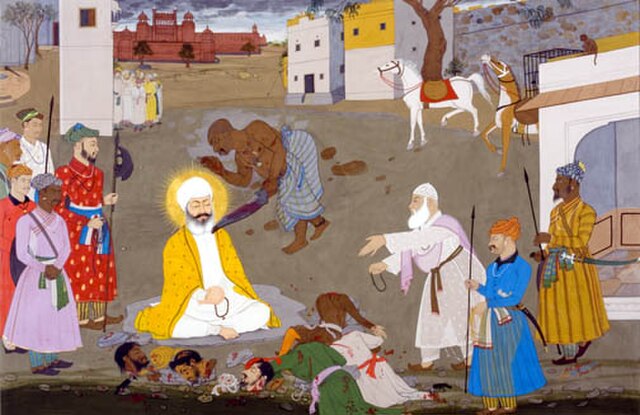
On November 24, 1675, Guru Tegh Bahadur Sahib Ji was publicly beheaded in Chandni Chowk, Delhi, after witnessing the brutal martyrdom of his companions Bhai Mati Das, Bhai Sati Das, and Bhai Dayal Das. He was imprisoned, tortured, and ultimately executed for refusing to accept Islam or renounce his beliefs.
The events surrounding his martyrdom were marked by extraordinary acts of courage and devotion:
-
Bhai Jaita (Bhai Jiwan Singh) retrieved Guru’s severed head and brought it to Anandpur Sahib for cremation.
-
Lakhi Shah Labana salvaged Guru’s body, burning his own cottage to cremate the remains, now commemorated by Rakab Ganj Sahib.
Guru Tegh Bahadur Sahib Ji’s sacrifice was unparalleled; it not only saved a persecuted population but also galvanized resistance to religious intolerance across India.
Legacy: Hind di Chadar and Creation of Khalsa
Guru Tegh Bahadur Sahib Ji is revered as Hind di Chadar—the Shield of India—for his defense of religious liberty. His martyrdom inspired his son, Guru Gobind Singh Sahib Ji, to create the Khalsa—a collective of saint-soldiers dedicated to justice, equality, and religious freedom. The principles of dignity, courage, and fearlessness remain central to Khalsa identity and Sikh tradition today.
His day of martyrdom, Shaheedi Diwas (24 November), is a solemn reminder of the enduring need to safeguard human rights and conscience.
Personal Touch: Guru Tegh Bahadur Sahib Ji’s Relevance Today
The message of Guru Tegh Bahadur Sahib Ji extends far beyond history—a beacon of hope for oppressed souls everywhere, transcending caste, creed, or gender. His teachings promote living with compassion, humility, and solidarity in the face of injustice—a foundation for a harmonious and inclusive society.
The lessons from his life encourage every person to remain steadfast in truth, help those who are suffering, and approach every challenge with calm and inner strength. The practice of Langar, Sewa, and the Sikh commitment to equality and justice all owe a deep debt to Guru Tegh Bahadur Sahib Ji’s sacrifice.
Modern movements for human rights, interfaith dialogue, and secular values find his philosophy as ever-relevant, reminding us of the power of conscience to transform society.
Conclusion: The Timeless Beacon
Guru Tegh Bahadur Sahib Ji’s contributions are woven into the very fabric of Indian history and spiritual thought. His supreme sacrifice for the freedom of conscience is a global emblem for human rights. The values he lived by—detachment from materialism, courage in adversity, compassion for all, and resilience in the face of tyranny—continue to inspire and inform a better world.
For anyone seeking meaning in life or solace in times of suffering, Guru Tegh Bahadur Sahib Ji’s teachings offer wisdom, comfort, and strength. Today, as societies struggle with intolerance and injustice, remembering and implementing these teachings is as vital as ever for building a more compassionate and inclusive future.
External Link for Further Reading:
Learn more about Guru Tegh Bahadur Sahib Ji on Wikipedia