


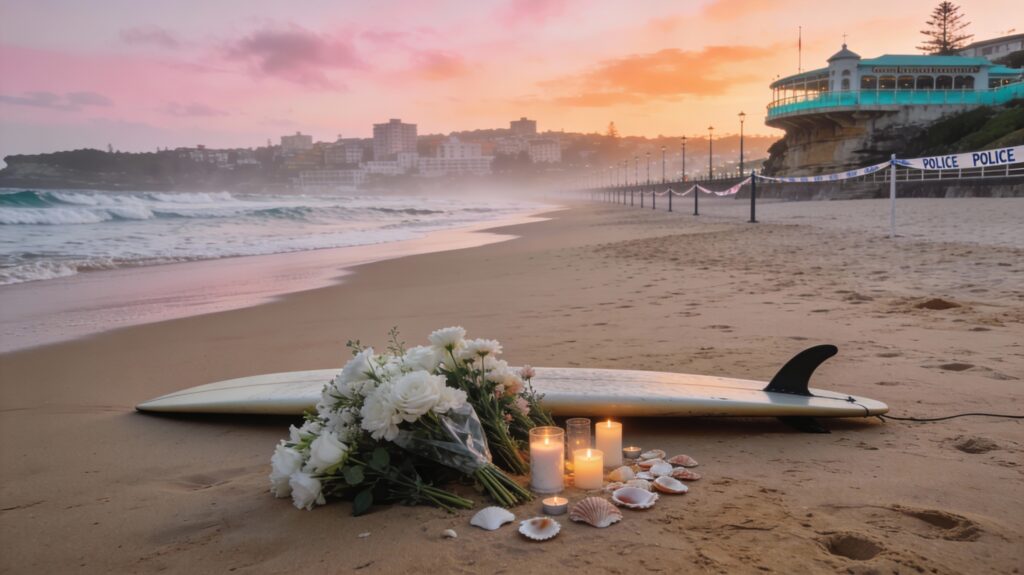
Introduction — a community in shock
Bondi Beach is one of Australia’s most recognisable public spaces: a sweep of sand and surf that has for over a century combined laid-back beach culture with the daily rhythms of locals and visitors. In mid-December 2025, that familiar scene was violently interrupted when an attack at a Hanukkah community event at Bondi left scores of people injured and many dead. The shock has been felt not only in Sydney but across Australia and around the world. This piece is written as a witness and explainer: a careful, empathetic account of what happened, the immediate human response, and the longer questions the incident raises for public safety, social cohesion, and the future of Bondi. Reuters+1
What happened — a clear, careful timeline
On the evening of 14 December 2025, a Hanukkah event called “Chanukah by the Sea” at Bondi Beach was underway, attended by a large crowd. During the gathering, gunfire erupted. Multiple attackers reportedly opened fire on the crowd, and improvised explosive devices were later found near the event area. Police and emergency services responded rapidly; one attacker was killed at the scene by police, while others were wounded and taken into custody. Initial reports indicate the event was deliberately targeted and have described the act as an antisemitic terrorist attack. Authorities confirmed multiple fatalities and dozens of injuries in the hours that followed, and investigations were immediately launched. AP News+1
Because the situation was fluid in the immediate aftermath — with police operations, casualty reporting and forensic work ongoing — the official numbers and some details have continued to be updated through the day. For the most authoritative, up-to-date casualty and legal information, refer to official police briefings and national news outlets. The Guardian
Human stories: courage, confusion, and grief
Beyond the cold facts, the evening produced human dramas that resist neat summaries. Witnesses described chaos: parents clutching children, people running across sand and grass, and first responders navigating a scene strewn with personal belongings. There are already verified reports of bystanders intervening to disarm an attacker, an action that by many accounts saved lives. Surf lifesavers and volunteer first responders were among the first on scene, providing emergency aid before police and ambulances could secure the area. Their quick actions — delivering first aid, moving people to safety, and coordinating with emergency services — have been widely praised. The Guardian+1
Communities that know Bondi intimately — local shopkeepers, surf club members, synagogue congregations and families who gather there — are understandably shaken. Vigils and spontaneous memorials began forming within hours, as people tried to mark grief and create space for collective mourning. Reporting from the scene has emphasized the strain on local hospitals and the long, personal paths of recovery for those injured. The Guardian
The immediate official response
Federal, state and local officials moved quickly to condemn the attack and promise support. Prime Minister Anthony Albanese described the event in the strongest possible terms and vowed action; New South Wales police launched a major investigation; and federal agencies coordinated support for victims and families. Political leaders from other countries also offered condolences and solidarity. Authorities confirmed that improvised explosive devices were discovered and that an extensive forensic and counterterrorism response was underway. AP News+1
Important immediate steps announced by government and authorities included:
-
Full police investigation and forensics at the scene. Reuters
-
Medical and psychological support for survivors and witnesses, with hospitals treating multiple patients. AP News
-
Emergency public communications and warnings; temporary cordons set up at Bondi and adjacent areas. The Guardian
Bondi’s lifeguards and volunteers — first on scene
One of the most striking and widely reported aspects of the response was the role played by lifesavers and volunteer surf club members. Trained in rescue and first aid, these volunteers used their familiarity with the beach environment to stabilise the scene and render aid before full emergency services could arrive. Royal Life Saving Australia and local surf life saving clubs issued statements honoring their members’ efforts while urging the public to follow official directions as the situation continued to unfold. Royal Life Saving Society – Australia+1
Their actions highlight an often-overlooked fact: public spaces like beaches depend on a web of formal and informal civic actors — lifeguards, shopkeepers, volunteers — whose preparedness matters enormously during emergencies.
Media, misinformation and responsible reporting
During rapidly developing tragedies, the race to publish can sometimes outpace verification. Journalists, social platforms and consumers all have roles to play in ensuring accurate information. Authorities urged the public to rely on official channels for casualty numbers and safety instructions; likewise, reputable media outlets have worked to verify identities and details before publication. Readers should expect numbers and names to be revised as police investigations and hospital confirmations are completed. The Guardian
As you share or repost information, be cautious: unverified social posts can cause additional distress and hamper investigations. If you’re seeking to help, donate to verified relief funds or support formal victim assistance programs rather than forwarding unconfirmed appeals.
Safety, firearms, and a national reckoning
Australia’s history includes a defining moment: the Port Arthur massacre (1996), after which sweeping gun reforms were enacted and widely credited with reducing mass-shooting incidents. The Bondi attack has already reignited urgent national debate about weapons, lone-actor radicalisation and the regulatory framework for firearms and explosives in Australia. Politicians from across the spectrum have signalled potential legal reviews; experts expect inquiries into how suspects obtained weapons and whether policy changes are required. The Guardian+1
Key questions likely to be part of the policy conversation:
-
How did the attackers obtain guns and explosive materials?
-
Were there systemic gaps in monitoring radicalisation or extremist behaviour?
-
Should there be additional restrictions or enforcement strategies around certain categories of weapons and explosive components?
These debates will be contentious and politically charged, but they are part of a national conversation about preventing future tragedies.
The social context: hate, antisemitism, and community security
Authorities and community leaders have described the event as deliberately targeting the Jewish community, which has prompted national soul-searching about antisemitism, hate crimes and community protection. Australia’s Jewish communities are concentrated in the eastern suburbs of Sydney, and the attack has reopened difficult questions about social cohesion and protection for minority communities. Religious, community and civic leaders from many backgrounds have publicly deplored the violence and expressed solidarity. The Guardian+1
This is not just a security story: it’s a social and cultural story about how communities treat difference, how online and offline radicalisation interact, and how public institutions respond to threats to targeted groups.
Bondi as place — tourism, local life, and recovery
Bondi Beach is not only an iconic tourist destination but also a lived neighbourhood — cafés, surf clubs, local markets, and a daily rhythm shaped by sunrise swimmers and lunchtime crowds. The immediate human and economic impacts of this attack will be felt in small businesses, hospitality, and the informal daily life of residents. Recovery will be both practical (supporting victims, rebuilding confidence) and symbolic (reclaiming a public space that has always been shared across cultures). Local councils and business associations will likely coordinate trauma counseling, economic support for affected businesses, and community events aimed at healing and remembrance. Waverley Council+1
Travel advisories and temporary restrictions are common after such events; visitors should check official NSW and Australian government sites before planning travel. If you’re in the area, follow police and council guidance — avoid the cordoned sites and respect memorial spaces.
Practical help and ways to support
If you want to help in the wake of the Bondi incident, consider the following responsible options:
-
Donate to verified victim support or hospital funds vetted by reputable charities and local authorities.
-
Offer blood donations if hospitals publicly request them (always check official hospital and Red Cross channels).
-
Volunteer time or resources through established community organizations if calls for help are issued.
-
Attend or contribute to peaceful vigils and memorials organized by community leaders.
Avoid sharing unverified donation links or personally identifiable images of victims without consent.
What investigations will focus on
Police and counterterrorism investigators will undertake a range of forensic and intelligence tasks:
-
Evidence recovery and ballistics analysis from the scene.
-
Examination of the attackers’ backgrounds, communications, and networks.
-
Financial, travel and procurement trails to see how weapons or explosive materials were obtained.
-
Interviews with witnesses and victims to establish a precise timeline.
These strands will feed into possible prosecutions, public safety measures and policy recommendations. Given the presence of explosive devices and the attack’s apparent motive, agencies federal and state will coordinate closely. AP News+1
International reactions and diplomatic impact
High-profile attacks on civilian gatherings typically prompt statements of condemnation from foreign governments and may affect diplomatic conversations. International Jewish communities and other diaspora groups have expressed grief and solidarity; some foreign leaders have publicly offered condolences and support to Australia. This international dimension reinforces how local tragedies can have global reverberations, particularly when they are seen as hate-motivated. AP News
The longer arc — resilience and remembering
In the weeks and months ahead, Bondi and Sydney will balance grief with a desire to heal. Commemorations, memorials and community dialogues will matter: they are how a place remembers those lost and reaffirms values of solidarity. Reopening public life — with increased safety measures, mental-health resources and community engagement — is part of recovery, but so is facing difficult questions honestly: about hate, about surveillance and privacy, and about the social conditions that allow extremism to grow.
For locals and visitors alike, the message will likely be: Bondi remains a living neighbourhood and a public commons. Out of sorrow, communities often find courage and renewed commitments to mutual care.
Practical travel notes for visitors (short)
-
Check NSW Police and Waverley Council updates before visiting.
-
Respect cordons and memorial areas.
-
If you are in Sydney and want to offer help, consult official community organizations for verified requests.
-
For those seeking to visit Bondi in the future, understand it is a place of both tourism and residence — come informed and respectful. Waverley Council+1
Conclusion — hold the people at the centre
News cycles will move on, but the people affected by the Bondi tragedy — families, friends, volunteers, and first responders — will live with the consequences for a long time. Reporting the facts, holding leaders to account for safety, and committing to community care are all necessary responses. Bondi is more than a headline: it is a neighbourhood, a coastline, a place of human memory. Our attention now matters; not as voyeurism, but as a civic act of bearing witness, supporting survivors and demanding constructive action from institutions entrusted with our safety.