Tom Latham’s Masterful Century Ends 1073-Day Wait: A Captain’s Redemption Story in Christchurch
The morning of December 3, 2025, dawned crisp and clear over Christchurch’s Hagley Oval, but the weight on Tom Latham’s shoulders had nothing to do with the summer weather. For 1073 days and 39 Test innings, that elusive three-figure mark had haunted him like a shadow he couldn’t outrun. As New Zealand’s Test captain walked to the crease, the murmurs had grown louder—not just from the crowd, but from critics questioning whether the left-hander still belonged at this level.
What happened next wasn’t just a century. It was a statement of defiance, a masterclass in concentration, and perhaps the most emotionally significant innings of Latham’s 88-Test career.
The Drought Breaks: A Century Three Years in the Making
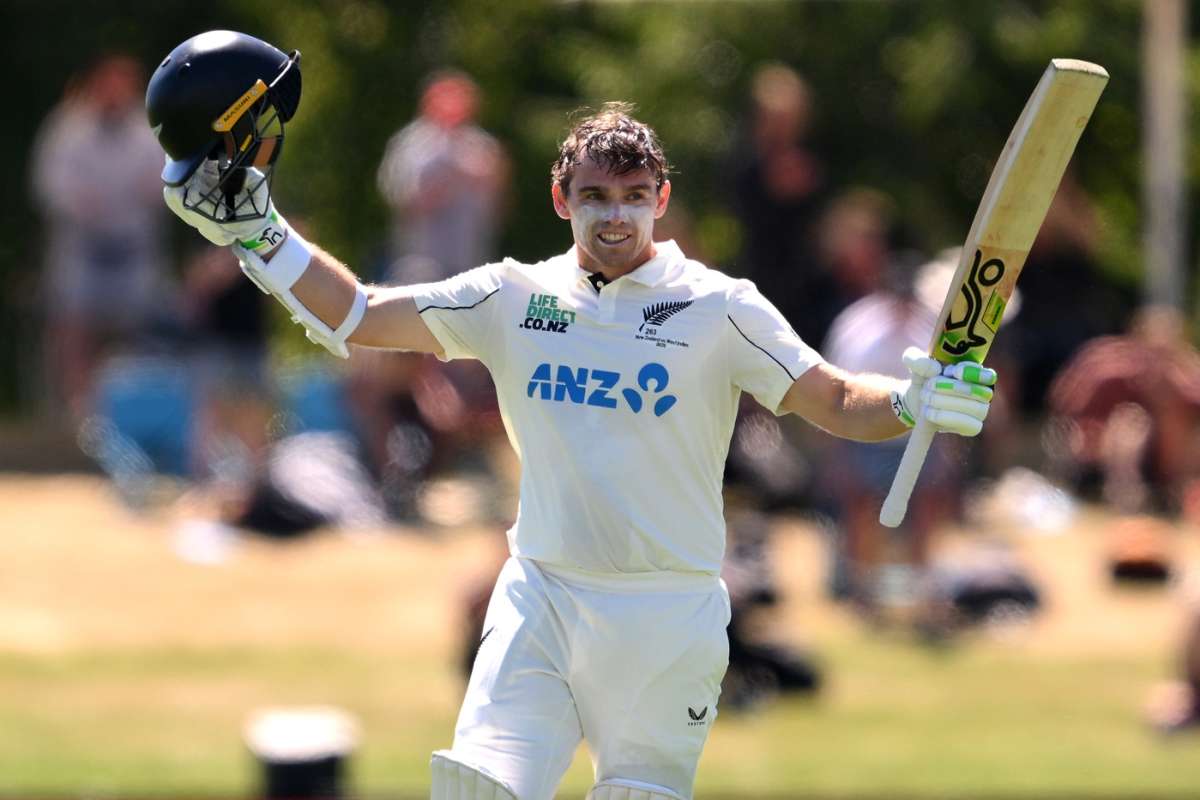
When Latham drove Kemar Roach through the covers for his ninth boundary, the bat’s sweet spot connected with a sound that must have reverberated through his entire being. The raised arms, the quiet nod to the dressing room, the relief etched across his face—this was no ordinary celebration. This was 14th Test century, yes, but his first ever against West Indies, and his first in any format since February 2023.

The numbers tell their own story: 1073 days is nearly three years of cricketing life. That’s 39 innings of starts that didn’t convert, of edges that carried, of lbws that were plumb, of promise unfulfilled. For a player of Latham’s caliber—New Zealand’s 7th highest international run-scorer and their most prolific Test opener—such a drought doesn’t just affect statistics. It chips away at confidence, invites scrutiny, and transforms every innings into a referendum on your place in the side.
“I think every batsman goes through these phases,” Latham had told journalists before the series, his voice measured but his eyes betraying a glimmer of the pressure he felt. “The key is to trust your processes, keep working hard, and remember why you started playing this game.”
Those processes were on full display as he crafted his unbeaten 100* against an attack that, while not at its historical peak, still possessed enough fire to trouble the world’s best. The innings contained just nine boundaries—a testament to patience over power, placement over pyrotechnics. Each run was earned, each leave calculated, each defensive push a reminder that Test cricket remains a game of discipline.
The Context: Leadership Under Fire
What makes this century even more remarkable is the timing. Latham hasn’t just been battling his own form; he’s been carrying the weight of New Zealand’s Test captaincy since October 2024. When the Blackcaps management decided to split the captaincy, entrusting the red-ball leadership to Latham while Kane Williamson continued in white-ball formats, they weren’t just handing over a ceremonial role. They were placing their faith in a man who would need to lead from the front at the very moment his own batting was under the microscope.
The pressure intensified during the Zimbabwe tour in August 2025, when a shoulder injury forced Latham to miss the second Test. Critics wondered aloud whether the dual burden of captaincy and wicketkeeping—he’s been donning the gloves in the absence of the injured Tom Blundell—was too much for the 33-year-old. The questions weren’t just about his batting anymore; they were about his entire cricketing future.
Yet true leaders find ways to respond when their backs are against the wall. In the first Test against West Indies, Latham’s 84-run opening partnership with Devon Conway (37) set the platform that Williamson’s brief cameo and Rachin Ravindra’s fluent 70* would build upon. By tea on day three, New Zealand had established a commanding 297-run lead, with Latham’s century the centerpiece of their dominance.
The Innings: A Study in Technical Excellence
Cricket purists will study this innings for years to come—not for its explosive strokeplay, but for its textbook perfection under pressure. Let’s break down what made Latham’s knock so special:
The Opening Salvo: 0-50
Latham began cautiously, as any wise opener should on a surface that still offered something for the seamers. His first 50 runs came from 91 balls, a strike rate of just 54.9 that would have seemed pedestrian in limited-overs cricket but was perfectly calibrated for the Test match situation. The highlight was his judgment outside off-stump, leaving deliveries that would have tempted lesser batsmen into fatal edges.
“His defense was immaculate,” noted former New Zealand opener Mark Richardson in commentary. “When you’re going through a lean patch, the first thing that goes is your trust in your defensive technique. Tom showed us today that his fundamentals haven’t just remained intact—they’ve improved.”
The Acceleration: 50-100
The second fifty came from just 69 balls, as Latham began to impose himself on the tiring West Indies attack. The partnership with Ravindra reached 100 runs in rapid time, with Latham playing the anchor role while the younger left-hander flourished around him. This is the mark of a senior player—creating space for talent to express itself while maintaining the integrity of the innings.
The moment of triumph arrived in the 54th over. With tea approaching and the West Indies fielders beginning to show signs of frustration after two dropped catches, Latham seized his opportunity. Back-to-back fours off Shields took him to 89, and when a glorious drive followed by quick running brought up the century, the celebration was restrained but the emotion was palpable.
The Numbers Behind the Masterpiece
Latham’s 14th Test century elevates him to a special place in New Zealand cricket history. Let’s examine where this innings places him among the greats:
| Milestone | Statistic | Significance |
|---|---|---|
| Test Centuries | 14 | Most by a New Zealand opener in Test history |
| International Runs | 10,000+ | 8th Kiwi player to reach this landmark |
| Captaincy Record | 8 wins, 7 losses (53.33%) | Full-time Test captain since Oct 2024 |
| Overall Test Average | 38.38 | 5,834 runs from 88 Tests |
| vs West Indies | 1st century | Previously averaged 31.03 against them |
The century also ended a peculiar statistical anomaly: despite playing West Indies nine times in Tests, Latham had never reached triple figures against them. That box is now emphatically ticked.
The Captain’s Journey: From Stand-in to Standard-Bearer
Tom Latham’s path to becoming New Zealand’s permanent Test captain is a story of quiet persistence. He first captained the side back in 2017 during an ODI tri-series in Ireland, but for most of his leadership tenure, he operated in a stand-in capacity, filling in when Williamson was unavailable.
His record in those temporary roles was impressive: 28 wins from 44 ODIs (63.64% win rate) and a historic 3-0 whitewash of India in his first series as full-time Test captain. Yet there’s a world of difference between being a caretaker and being the man entrusted with the long-term vision.
Since October 2024, Latham has had to navigate:
-
The transition from Williamson’s dominant leadership era
-
His own batting form slump
-
Injury management (shoulder issues in August 2025)
-
The added responsibility of wicketkeeping
-
Managing a young batting lineup featuring Ravindra, Conway, and Daryl Mitchell
Through it all, his calm demeanor has remained constant. Teammates describe him as a “player’s captain”—someone who leads through example rather than oratory, whose work ethic sets the standard, and whose technical advice is valued by batsmen at every stage of their careers.
The Williamson Factor: A Seamless Partnership
The dynamics between Latham and Kane Williamson represent one of modern cricket’s most successful leadership partnerships. While Latham handles Test duties, Williamson continues to be the white-ball supremo, but their collaboration in the Christchurch Test showed how seamlessly they work together.
Williamson’s dismissal for nine on the last ball before lunch could have triggered a collapse. Instead, Latham’s unbeaten 40 at the interval provided the stability that allowed Ravindra to flourish. It’s this ability to absorb pressure that makes Latham such a valuable foil to Williamson’s more expansive game.
“Kane and I have a great understanding,” Latham explained after the day’s play. “We talk constantly about the direction we want to take this team. My job is to ensure that the standards we’ve set over the past decade don’t just remain—they improve.”
The Personal Battle: More Than Just Statistics
What the scoreboard doesn’t show is the human story behind this century. The 1073-day wait wasn’t just a professional challenge; it was a personal crucible that tested Latham’s relationship with the game he loves.
Those who know him speak of a man who, despite hisPublic persona of calm, wrestled privately with doubt. The son of former New Zealand cricketer Rod Latham, Tom carries the weight of expectation that comes with representing a cricketing family. When runs dried up, the whispers weren’t just about his place in the team—they were about whether he could uphold the family legacy.
The shoulder injury during the Zimbabwe series in August 2025 was particularly cruel timing. Just as he was finding his feet as captain, his body seemed to betray him. The forced absence from the second Test gave critics more ammunition: was he durable enough for modern cricket’s relentless schedule?
Yet adversity often forges the strongest steel. Latham’s response wasn’t public complaints or social media justifications. It was hours in the nets, endless video analysis, and conversations with mentor and father Rod about the mental side of batting. The result was an innings that combined technical rigor with emotional release.
The Wicketkeeping Complication
Adding another layer to Latham’s challenge is his current role as wicketkeeper. With Tom Blundell sidelined due to injury, Latham has taken on the gloves, adding physical toll to mental burden. In modern cricket, few players successfully balance top-order batting with wicketkeeping duties—especially not while captaining.
The statistics show the strain: before this innings, Latham had averaged just 26.4 in Tests since becoming full-time captain. The double burden was taking its toll. But century proves that class is permanent, and that sometimes the best way to silence doubters is with the sweetest sound in cricket—the ball meeting the middle of the bat.
Impact on the Series: Setting Up Victory
Latham’s century didn’t just break personal demons; it shattered West Indies’ hopes in this first Test. By the end of day three, New Zealand had built a lead of 297 runs, with Latham and Ravindra’s unbeaten partnership pushing the advantage towards insurmountable territory.
The West Indies attack, led by Kemar Roach and Jayden Seales, toiled honestly but found no way through Latham’s defenses. Dropped catches—two in one session—betrayed their frustration and fatigue. When a team sees a senior player bat with such authority, it lifts the entire dressing room.
New Zealand’s strategy is now clear: bat long into day four, declare with enough time to bowl West Indies out, and take a 1-0 series lead to Wellington for the second Test starting December 10. With the ICC World Test Championship points at stake, this victory could be crucial for New Zealand’s chances of reaching the final.
The Road Ahead: Wellington and Beyond
The second Test at Basin Reserve presents new challenges. Tom Blundell’s absence means Latham will keep wickets again, adding to his workload. The management has called up Mitchell Hay as cover, signaling caution around Blundell’s injury.
For Latham personally, the goal will be consistency. One century doesn’t erase 39 innings of struggle, but it provides the template. The technical adjustments—perhaps a slightly more open stance, a clearer trigger movement—can now be replicated with confidence.
The West Indies will come harder in Wellington. They’ll study every leave, every defensive prod, looking for a chink in the armor. But great players adapt, and Latham has shown he can adjust his game to the situation.
Legacy in the Making: Where Latham Stands
At 33 years old, Tom Latham is entering the prime years for a Test batsman. With 88 Tests already under his belt, he’s on track to join the pantheon of New Zealand greats who’ve played 100+ Tests. But it’s not just longevity that defines greatness—it’s impact.
Latham’s 14 Test centuries place him behind only Williamson (28), Ross Taylor (19), and Martin Crowe (17) among New Zealand batsmen. As an opener, he’s already the most prolific century-maker in Kiwi history, a remarkable achievement in itself.
His captaincy record, while still in its infancy, shows promise. The 3-0 whitewash of India in his debut series as permanent captain will be remembered as one of New Zealand’s finest moments, regardless of what follows. If he can maintain a win percentage above 50 while contributing runs at the top, he’ll cement his place as one of New Zealand’s most successful leaders.
The Father-Son Legacy
It’s impossible to discuss Tom Latham without mentioning Rod Latham, his father and former New Zealand cricketer. The elder Latham played 20 ODIs in the early 1990s, a solid contributor but never a star. Tom has surpassed those numbers many times over, but the family connection adds a layer of poignancy to every innings.
Rod was in the commentary box when Tom reached his century, his voice catching slightly as he described the moment. “As a father, you just want your children to be happy,” he said. “As a cricketer, you know how hard he’s worked. This means everything.”
That human element—the pride of a father, the relief of a son—transcends statistics. It’s what makes cricket more than just a game.
Conclusion: The Redemption is Real
Tom Latham’s century in Christchurch isn’t just another entry in the scorebook. It’s a redemption story that reminds us why we fell in love with Test cricket. In an era of slam-bang T20 cricket and shortened attention spans, here was a man who spent 1073 days searching for something he’d lost, and found it through discipline, courage, and sheer force of will.
The innings contained no switch hits, no ramp shots, no dancing down the wicket. Instead, it featured solid defenses, intelligent leaves, and well-timed drives—cricket as it was meant to be played. In doing so, Latham didn’t just answer his critics; he provided a masterclass for every young batsman who dreams of wearing the black cap.
As New Zealand pushes for victory in this Test and builds towards the second in Wellington, they do so with a captain who has proven that class is permanent, that form is temporary, and that sometimes the longest journeys lead to the sweetest destinations.