

Khaleda Zia dies, Begum Khaleda Zia, towering figure of Bangladeshi politics and the country’s first female prime minister, died at the age of 80 on Tuesday morning, 30 December 2025, after a prolonged battle with illness. Her passing marks the close of a dramatic and contentious chapter in the national story, eliciting deep emotion at home and reverberations far beyond Bangladesh’s borders. Reuters+1

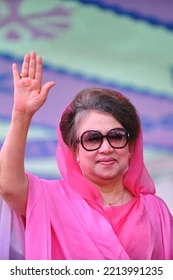
At around 6 a.m. local time, according to a statement from her political party, the Bangladesh Nationalist Party (BNP), Zia breathed her last in Evercare Hospital in Dhaka, where she had been under treatment since late November. Health complications stemming from multiple chronic conditions — including advanced cirrhosis of the liver, diabetes, arthritis, and serious chest and heart problems — had steadily worsened, despite intensive medical care. India Today NE
Her death comes at a politically sensitive moment: just weeks before national elections scheduled for February 2026, with nomination papers filed on her behalf for one parliamentary seat. The BNP had hoped she might play some role in a political landscape reshaped by recent turmoil. India Today NE
Breaking News Summary: A Nation in Mourning
Zia’s health struggles had been public for months, and her admission to Evercare Hospital on 23 November sparked intense speculation about her condition. Doctors placed her on ventilator support in early December, and although there were efforts — including the preparation of a special Qatar-based aircraft to fly her to London for treatment — her fragile state prevented any transfer abroad. India Today NE
The BNP confirmed she died after a long struggle with age-related illnesses, surrounded by close family. The immediate news triggered an official announcement of seven days of mourning by the BNP, with black flags and badges across party offices — a symbolic gesture that reflects the depth of emotional and political loss felt by her supporters. Dhaka Tribune
Chief Adviser Muhammad Yunus, head of the interim government, expressed condolences and described Zia as “an important chapter in the history of Bangladesh,” emphasizing her long fight for democratic principles and multi-party politics. Daily Sun
Messages of sorrow also flowed from various quarters of society, including political allies and ideological partners such as Jamaat-e-Islami, whose leaders prayed for her soul and offered solace to her family and supporters. Daily Sun
Life and Career Overview: From Relative Obscurity to Political Power
Born in 1945 in Jalpaiguri (then British India) and raised in Dinajpur, Khaleda Zia was not originally destined for public office. Her early life was marked by family commitments rather than political ambition, and she spent her youth focused on raising her children after marrying Ziaur Rahman, an army officer who would become President of Bangladesh. The Times of India
Her husband was a pivotal figure — a founder of the Bangladesh Nationalist Party (BNP) in 1978 and a key leader in the post-independence era — until his assassination in a 1981 military coup. His death jolted the nation and upended Khaleda Zia’s personal life, setting her on a collision course with destiny. The Times of India
By 1984, she had reluctantly assumed leadership of the BNP, transforming from a grieving widow into a steely political strategist. During the H. M. Ershad military regime, she emerged as one of the most visible voices of civilian resistance, helping spearhead mass movements that eventually led to Ershad’s resignation in 1990. India Today NE
In the democratic elections of 1991, Khaleda Zia led the BNP to victory and became Bangladesh’s first female prime minister, a landmark moment not only for her country but for Muslim-majority nations globally. Her government transitioned the nation from a presidential system to a parliamentary democracy and prioritized educational initiatives such as free primary schooling and support for girls’ education. Her commitment to social welfare programs left lasting impressions in rural communities and among youth activists. India Today NE
Zia served two full parliamentary terms — 1991–1996 and 2001–2006 — and briefly in early 1996 during political uncertainty. Despite facing fierce opposition, her supporters credit her with consolidating democratic institutions and expanding access to education across socioeconomic lines. India Today NE
The “Battle of the Begums”: Rivalry, Resistance, and Political Polarization
No account of Khaleda Zia’s life can omit her long-standing rivalry with Sheikh Hasina, leader of the Awami League and daughter of Bangladesh’s founding father, Sheikh Mujibur Rahman. These two women — often referred to in media and political discourse as the “Battling Begums” — defined Bangladeshi politics for more than three decades. archive.vn
Their relationship was complicated: they once cooperated to remove military rule in 1990, only to become bitter opponents almost immediately thereafter. Elections, governance disputes, and ideological divisions deepened the divide, transforming their rivalry into a central axis of national life. archive.vn
Street protests, hartals (general strikes), and violent confrontations frequently accompanied shifts in power between the two parties. This rivalry not only shaped electoral outcomes but also influenced public sentiment, governance decisions, and the very texture of Bangladesh’s democratic experiment. Aaj English TV
Analysts note that this dynamic polarized the electorate, driving wedges between communities and often derailing legislative progress. Still, many citizens on both sides viewed the clash as more than politics — it was a battle for the soul and direction of the nation. Aaj English TV
Health Struggles and Final Days: A Long Decline
Khaleda Zia’s health had been deteriorating for years. By late 2025, her condition was visibly poor, and on 23 November she was admitted to Evercare Hospital with lung and heart infections. Despite the best efforts of a medical team that included experts from around the world, her condition worsened. Daily Sun
Doctors noted her advanced liver cirrhosis, chronic diabetes, arthritis, and cardiac complications — a combination that made recovery increasingly unlikely. On 11 December, she was placed on ventilator support as her body weakened. Daily Sun
There were plans to airlift her to London for advanced treatment aboard a specially arranged Qatari air ambulance, but her fragile condition prevented safe transfer. Her final hours were spent surrounded by family, including her eldest son Tarique Rahman, the acting chairman of the BNP, who had returned from exile only days before her health took a turn for the worse. The Daily Star+1
Though medical records and public statements provide clinical details, it was personal moments — such as visits from loved ones and private prayers — that highlighted the human side of a woman whose public life was spent in the unforgiving glare of political battle. Daily Sun
Immediate Reactions: A Nation Reflects
Within hours of the announcement, political figures across Bangladesh expressed sorrow and respect. Leaders from different parties — even those who had clashed with Zia for decades — acknowledged her role in the country’s democratic journey.
Muhammad Yunus, head of the interim government, praised her for championing people’s rights and strength in adversity. His message stressed that, regardless of political affiliations, her contributions to democracy would not be forgotten. Daily Sun
Condolences also arrived from ideological partners and smaller parties, such as the leadership of Jamaat-e-Islami, who prayed for her soul and offered sympathies to her family and followers. Daily Sun
Internationally, neighbouring countries and global observers noted the end of a defining era in Bangladeshi politics. Leaders and analysts highlighted her unique status as a female leader in a region where such representation remains uncommon, and offered reflections on her legacy as both a democratic trailblazer and a polarizing figure. Reuters
Political Implications: The BNP and Bangladesh’s Future
Khaleda Zia’s passing leaves a significant power vacuum in the Bangladesh Nationalist Party, a political force she led — often single-handedly — through triumphs and trials. Her elder son, Tarique Rahman, who returned to Bangladesh after nearly two decades in self-imposed exile, now faces the daunting task of steering the BNP through the coming February general elections. India Today NE
Rahman’s return had been seen as a potential turning point for the party, reinvigorating its base and offering continuity to Zia’s supporters. He is poised to contest in multiple constituencies, likely taking up the mantle of leadership that his mother embodied for decades. India Today NE
Yet the political landscape is fraught with challenge. The Awami League — once the arch-rival party — has been out of power since a mass uprising in 2024 forced Sheikh Hasina into exile. The interim government’s role and the broader contest for democratic legitimacy will shape national debates in the weeks ahead. The Times of India
Internal dynamics within the BNP will also come into focus. Without the magnetic presence of Khaleda Zia, the party must navigate factional pressures, generational shifts, and questions about its ideological future. Whether Tarique Rahman can unify these forces and broaden the party’s appeal will be a central storyline in 2026. The Times of India
Historical and Cultural Context: A Life Intertwined with National Identity
Khaleda Zia’s life mirrors the tumultuous history of Bangladesh itself — a nation born amid war in 1971 and defined by cycles of military rule, democratic aspirations, and intense political polarization. The Times of India
Her emergence as a leader in the 1980s came at a time when civilian politics struggled against authoritarianism. Her role in mass movements helped restore democratic governance, yet subsequent years also revealed the limits and contradictions of Bangladesh’s political maturity. India Today NE
Her tenure was not without controversy. Corruption allegations dogged her career, resulting in high-profile convictions in 2018 that were viewed by supporters as politically motivated. Her later acquittals in 2025 opened a chapter of legal rehabilitation and political comeback that, tragically, was cut short by her health. The Times of India
These controversies — combined with her steadfast commitment to her party and base — illustrate the dual nature of her legacy: one of democratic contribution and political contention. Aaj English TV
Legacy and Reflection: A Polarising Icon
As Bangladesh enters a new year without Khaleda Zia, reflections on her impact vary widely. To many, she was a pioneer for women in politics, a rare female leader who rose against societal expectations and held the country’s highest office. Reuters
Historians note her resilience in the face of political repression and personal adversity, emphasizing how she pushed boundaries in a deeply patriarchal context. Her educational reforms and opposition leadership helped shape public life in ways that will outlive her tenure. India Today NE
Yet critics point to moments of partisan entrenchment, periods of political stalemate, and alliances that deepened social divides. Her rivalry with Sheikh Hasina — while legendary — also entrenched adversarial politics that sometimes stifled collaborative governance. Aaj English TV
Citizens interviewed across Bangladesh expressed mixed emotions: pride in her historic accomplishments, sorrow at her passing, and uncertainty about what the future holds. Many older voters remember the heady days of democratic resurgence in the early 1990s, while younger citizens focus on the unfinished business of economic and social development. The Guardian
Conclusion: An End and a Beginning
Khaleda Zia’s death signifies not just the end of a remarkable individual life, but the closing of a distinct era in Bangladesh’s political evolution. Her journey — from reluctant political figure to national leader, from imprisonment to international stature — reflects the contradictions and hopes of a nation still wrestling with its democratic identity. Reuters
As Bangladesh prepares for crucial elections, the echoes of her legacy will resonate in campaign speeches, party platforms, and public memory. Her absence will be deeply felt, yet the paths she helped forge — both contested and celebrated — will continue to shape the contours of Bangladesh’s political landscape for generations to come. Dhaka Tribune
In the end, Khaleda Zia’s life was a study in resilience — a testament to the power of determination and the complexity of public service in turbulent times. Her death closes a chapter but opens new questions about leadership, democracy, and national direction in Bangladesh’s unfolding story.