
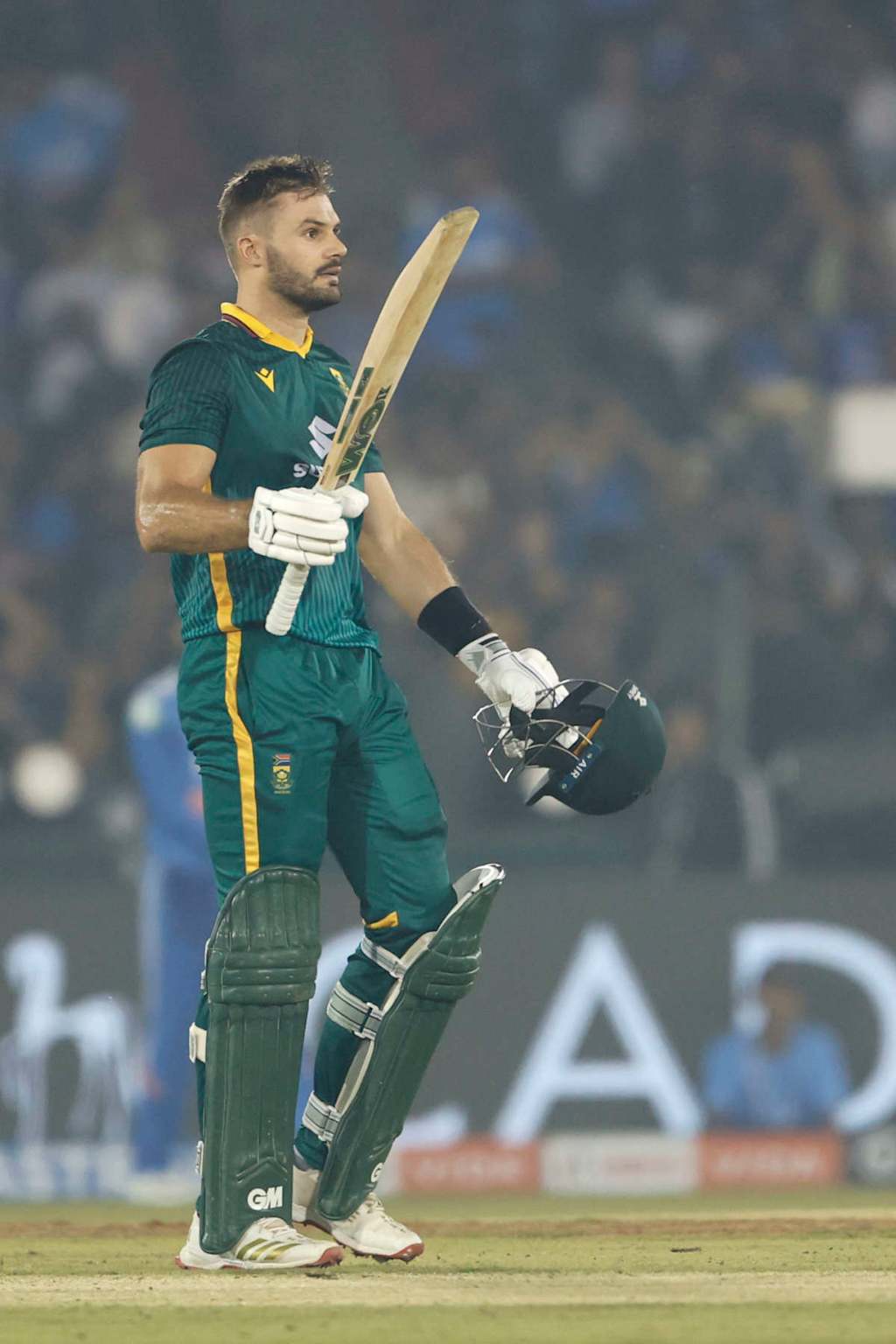
India vs South Africa 2nd ODI 2025: Markram’s Masterclass Stuns India Despite Kohli–Gaikwad Centuries
A Night of High Drama: India vs South Africa 2nd ODI — Raipur, December 3, 2025
Under the floodlights of the Shaheed Veer Narayan Singh International Stadium in Raipur, a pulsating second ODI between India and South Africa unfolded — a match that will be remembered for its sheer batting fireworks, controversial dew-maze, and the indomitable fightback by the visitors. What promised to be a comfortable home win for India turned into a humbling loss as South Africa successfully chased down a mammoth 359, leveling the three-match series 1–1. ESPN+2Reuters+2
Building the Monument: India’s Batting Onslaught
Winning the toss, South Africa elected to field — a decision that, on paper, seemed justified given the pitch. But the Indian top-order (and middle) had different ideas. India posted a colossal 358/5 in their 50 overs, a total any side would be delighted with. myKhel+2Business Standard+2
Key Contributions
-
Virat Kohli — Always the spine of India’s batting, he delivered once again. Kohli smashed 102 off 93 balls, crafting his second consecutive ODI century in the series — a testament to his hunger and form. ESPN+2Dainik Bhaskar Hindi+2
-
Ruturaj Gaikwad — In only his third or so ODI for India (by many accounts), Gaikwad looked every bit a seasoned campaigner. He fashioned a classy 105 off 83 balls, studded with 12 fours and 2 sixes — his maiden ODI hundred arriving at the perfect time. myKhel+2The Times of India+2
-
KL Rahul (wk-c) — Not to be overshadowed, Rahul played a brisk finishing knock. His unbeaten 66 off 43 balls gave India the polish they needed, accelerating in the final overs to push the total beyond 350. NDTV Sports+1
-
Minor but useful runs: There was support from the likes of Ravindra Jadeja (24 not out) and extras (20 wides alone!) which added valuable runs. Business Standard+1
India’s innings was built on bold intent, strong shot-selection, and ruthless acceleration. The 195-run partnership between Kohli and Gaikwad after early setbacks (losing two wickets under 65) was the backbone of the total. NDTV Sports+2ESPN+2
On paper, India had done everything right: kill the new ball, rebuild after early blows, and finish strong. 358 — in modern ODI cricket — is no longer an “unassailable” total. But it was certainly a total that deserved respect.
The Collapse of Bowling Plans — And the Dew Factor
But as cricket often shows, a big score is only half the battle. The real test lies in defending it — and that, India failed.
Once South Africa began their chase, early breakthroughs seemed possible — India struck first, with Arshdeep Singh removing a key wicket. NDTV Sports+1 But after that, the Indian bowlers struggled to exert control. South Africa’s batters began to settle in.
Conditions played a devilish hand. Dew began to settle in the evening air — a recurring nemesis for teams defending high totals in day-night matches in India. As the outfield slowed, dew made the ball skid, spinners toe-pushing, and slower deliveries hard to grip. The Indian bowling attack couldn’t adjust effectively. Indeed, commentators and even team management later admitted dew was a major handicap. Reuters+2DD News+2
Some of India’s bowlers paid the price for this: they leaked runs at crucial moments, missed swing or drift, and failed to force mistakes. As stress mounted, the visitors gained momentum.
South Africa’s Nexus of Composure: Markram & Co. Deliver
If India built a monument, South Africa — under pressure — danced around it and slowly chipped it down. Their victory was a blend of nerve, tactical pragmatism, and timely aggression.
The Hero: Aiden Markram

Markram’s innings was nothing short of masterful. Coming in under pressure, he anchored the chase with a brilliant 110 — an 88-ball century — displaying maturity, timing, and temperament. ESPN+2ESPN Cricinfo+2
His calm head allowed the strike rotation, boundaries, and mental pressure to keep building on India’s bowlers. As someone who has played under pressure before, Markram delivered when it mattered. Unsurprisingly, he was named Player of the Match. ESPN+1
Crucial Support: Matthew Breetzke & Dewald Brevis
Markram didn’t do it alone. Breetzke’s explosive cameo — a quickfire 68 — provided vital impetus in the middle overs, ensuring the required run rate didn’t balloon. ESPN+1 Brevis, too, played a handy and aggressive 54 off 34 balls, accelerating at a time when India thought they had regained control. ESPN+1
Their aggression — balanced with smart shot-selection — exploited the fading ball and calmer headwinds.
Final Push: Nerves, Strategy & Execution
As the match progressed to its climax, South Africa lost a couple of wickets. But by then the equation had narrowed: they needed 37 off 33 balls with four wickets intact. Even a hamstring concern for Tony de Zorzi (who limped off after 45 overs) didn’t derail the plan. ESPN+1
The finishing touches were smooth yet composed — a far cry from panic. On a pitch that offered help to spinners early and swing/seam early on, the match turned into a batting spectacle. South Africa’s relentless focus, rotating strike, calculated aggression — and above all, believing in their chase — proved decisive.
The final score: South Africa 362/6 in 49.2 overs — winning by 4 wickets with 4 balls to spare. ESPN+2Business Standard+2
It also became one of the highest successful chases against India in men’s ODIs. ESPN.com+2NDTV India+2
The Human Angle: What This Loss Means for India
When you score 358 and still lose, it’s not just a defeat — it’s a statement. A cautionary tale. A wake-up call.
For India, several reflections emerge:
-
Batting was brilliant — but in ODIs, defense matters as much as offense. Kohli, Gaikwad, Rahul, Jadeja — all delivered. The shots were beautiful, the intent was fearless. But batting 50 overs is only half the job. Bowling under pressure, in tricky conditions, needs planning and execution.
-
Dew remains a silent killer in day-night matches. Teams must reevaluate their bowling plans — perhaps sending spinners early, or putting in extra shadow-nets/warm-up to gauge pitch behaviour. India’s bowlers looked unprepared for the dew-related skid: the ball didn’t turn, grip was lost, and slower deliveries floated up.
-
Fielding lapses — missed chances or misfields at crucial junctures — can cost matches even if bowlers are imperfect. Pressure builds up when a catch is dropped or a misfield happens at the wrong time; South Africa capitalized on those moments.
-
Mental pressure & fightback from opposition can overturn any total. Cricket — and especially limited overs — is a game of momentum swings. South Africa showed belief; India perhaps let their guard down after a strong batting show.
From the Indian camp’s perspective, this isn’t just a lost match — it’s a lesson. A brutal one, but necessary.
What This Win Means for South Africa & the Series
For South Africa, the victory was more than just a win — it was redemption, resilience, and revival.
-
Coming to India, chasing 359 on Indian soil — under pressure, in front of a packed home crowd — would test any batting lineup. That they held their nerve speaks volumes about their temperament. Markram, Breetzke, Brevis — the supporting cast — all stepped up.
-
It resets the series: from 1–0 down to 1–1. Momentum swings dramatically. The rubber-match (third ODI) now carries extra weight, extra pressure, extra hunger.
-
Strategically, it sends a message to India — that even 350+ is not “safe”. It might force India’s leadership to rethink approaches to bowling, fielding, and match-day tactics.
For South Africa fans and team management — this is a statement: “We came here to compete, and we came here to win.” In many ways, this win could become a turning point for their confidence and planning.
The Decider Awaits: What to Expect in the Third ODI
With the series now balanced at 1–1, the third and final ODI — likely scheduled in Visakhapatnam (as per pre-series plan) — gains massive importance. Here are the things I expect (as an analyst) will be under spotlight:
-
Bowling selection & flexibility for India: Given the dew and batting-friendly nature of the last match, India might rethink their bowling attack — perhaps more pace early, or more variation, or testing the pitch behaviour in advance.
-
Fielding intensity: No more dropped catches or slack fielding — small lapses cost dearly. Every miss will be magnified under pressure.
-
Batting strike rate vs. consolidation: India may look to bat first again, but they must avoid early wickets. Or if they bat second — they must pace the chase better than last time: rotating strike, rotating bowlers, keeping the equation under control.
-
South Africa’s confidence & aggression: The visitors will come in with momentum, belief from the last win. If they get a decent start, they will fancy chasing again. Their middle-order — Breetzke, Brevis, maybe others — will hold moral high ground.
-
Pressure on leadership: For India — captain and management must handle the pressure, backing the right players, managing bowlers, rotating fielders, using matchups effectively. For South Africa — they must remain calm, but aggressive; use what worked earlier.
Final Thoughts — A Match That Reminds You Why We Love Cricket
This 2nd ODI between India and South Africa was everything that makes cricket a roller-coaster: magnificent hundreds, aggressive stroke-play, strategic bowling, climatic pressure, and a last-over finish.
For fans, it was a treat — if you’re a lover of big scores and high drama. For players, a reminder: nothing is guaranteed. For teams, a lesson: balance matters — between bat and ball, aggression and caution, planning and instinct.
For neutral observers, a warning: in modern ODI cricket, any total above 300 — however daunting — can be chased, with the right mindset and execution. And if that chase is successful, even 358 becomes simply “a target.”
When the final ODI arrives, expect fireworks again. Expect strategies, expect surprises. Expect cricket — at its unpredictable, thrilling best.