

Golden State Warriors vs Los Angeles Clippers: Rivalry, Redemption, and the Battle for Western Conference Supremacy
1. Headline & Lead: A Night That Feels Heavier Than the Scoreboard
The clock bleeds under a minute. Stephen Curry wipes sweat from his mouthguard and exhales, eyes darting between the rim and the defender inching closer. Kawhi Leonard stands a few feet away, silent, unreadable, hands resting on his knees like a coiled spring. The crowd inside the arena—whether it’s Chase Center shaking with noise or Crypto.com Arena buzzing with nervous anticipation—knows this moment too well. Warriors vs Clippers. Again. Always intense. Always personal.
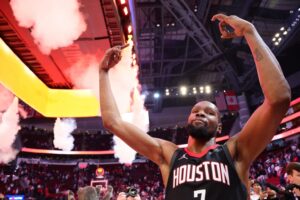

This is never just another regular-season game. Not when history is stitched into every possession. Not when pride, legacy, and Western Conference survival are all quietly riding on the next shot.
For more than a decade, Golden State and Los Angeles have crossed paths in ways that reshaped franchises, shattered expectations, and redefined what power looks like in the NBA. The Warriors built a dynasty. The Clippers chased one. Somewhere between those two arcs, a rivalry formed—uneven at times, bitter at others, but always meaningful.
2. The Evolution of the Warriors–Clippers Rivalry
There was a time when neither of these teams carried the weight they do now.
In the early 2010s, the Clippers were the flashy underdogs. Lob City—Chris Paul, Blake Griffin, DeAndre Jordan—was loud, explosive, and starving for respect. The Warriors, meanwhile, were talented but fragile, a promising group with Stephen Curry’s ankles still a question mark and postseason success more hope than reality.
The rivalry ignited not because of geography, but because of timing.
The 2014 playoffs changed everything. The Clippers, bruising and confident, knocked out a young Warriors team still learning how to win. The series was ugly, emotional, and physical. It left scars. For Golden State, it also planted a seed.
A year later, the power shifted. Steve Kerr arrived. Curry exploded. The Warriors became something the Clippers never fully managed to be: ruthless and unified. When Golden State beat Los Angeles in the 2015 playoffs, it felt like a symbolic passing of the torch. One team ascended to a dynasty. The other lingered in “what if.”
From that point on, every meeting carried subtext. The Clippers, reshaped again and again, tried to prove they belonged in the same conversation. The Warriors, now champions, treated these games like reminders—of where they came from and who they became.
3. Current Season Context: Why This Matchup Still Matters
Fast-forward to the present NBA landscape, and the Warriors vs Clippers clash remains one of the most loaded matchups in the Western Conference.
Neither team is carefree anymore. Golden State is no longer the unstoppable force of its peak dynasty years. The Clippers, despite elite talent, are constantly fighting time, injuries, and expectations.
The standings tell a tight story. A few games can separate home-court advantage from the play-in tournament. Every head-to-head game matters—not just mathematically, but psychologically. A win here stabilizes belief. A loss invites doubt.
Both teams arrive carrying momentum and concern in equal measure. Maybe the Warriors are finding rhythm again behind Curry’s brilliance. Maybe the Clippers are finally healthy enough to look dangerous. Or maybe both are still searching for answers.
That uncertainty is exactly what makes this rivalry compelling now. These aren’t young teams discovering themselves. These are veteran teams defending legacies.
4. Golden State Warriors: Identity, Strengths, and Struggles
The Warriors’ identity has always been rooted in movement—of the ball, of bodies, of ideas. Even now, when the dynasty years feel further away, the philosophy remains.
Stephen Curry is still the sun everything orbits around. His leadership has evolved from electric scorer to emotional anchor. He doesn’t just stretch defenses anymore; he steadies his team. His off-ball movement remains devastating, but it’s his patience that defines him now.
Klay Thompson and Draymond Green represent two sides of the Warriors’ soul. Klay, once automatic, now battles inconsistency and time. Draymond, still the emotional engine, walks a thin line between intensity and volatility. Together, they symbolize continuity—and the cost of longevity.
The bench and role players matter more than ever. Golden State’s margin for error is smaller now. Defense, once suffocating, can slip. Turnovers creep in. When spacing collapses, the offense stagnates.
Steve Kerr’s coaching has become more adaptive, more pragmatic. The Warriors still trust their system, but they now adjust more, pick their moments, and manage energy carefully. Their vulnerability lies in size, fatigue, and the reality that championships age you faster than losses do.
5. Los Angeles Clippers: Talent, Tension, and Expectations
The Clippers live in a different emotional space entirely.
Talent has never been the issue. Kawhi Leonard remains one of the most terrifying two-way players in basketball when healthy. He doesn’t waste motion or emotion. Every dribble, every shot feels deliberate. His presence alone changes the geometry of the court.
Paul George complements him with elegance and volatility. At his best, George is smooth, aggressive, and fearless. At his worst, he disappears into hesitancy. The Clippers’ ceiling often depends on which version shows up.
Around them, the supporting cast shifts—veterans, shooters, defenders—pieces assembled for one purpose: win now. Load management hovers over every decision. Chemistry is always a work in progress.
The pressure is relentless. No banners hang for potential. Every season without a championship feels heavier than the last. For the Clippers, Warriors games aren’t just rivalry matchups—they’re measuring sticks.
6. Tactical Breakdown: How the Game Is Won or Lost
Tactically, Warriors vs Clippers is chess at full speed.
Golden State wants pace and movement. They force defenders to chase Curry through screens, punish switches, and exploit hesitation. Their offense thrives on rhythm and trust.
The Clippers counter with physicality and length. They switch more willingly, try to deny clean looks, and force the Warriors into isolation basketball. When successful, they slow the game into something uncomfortable.
Rebounding and turnovers often decide these games. The Clippers want to dominate the glass. The Warriors want to create chaos and capitalize on mistakes.
Mid-game adjustments matter. Who traps Curry? When does Kawhi take over defensively? Does Golden State go small? Does Los Angeles punish it inside?
These are not theoretical questions. They are the margins where games tilt.
7. Star Power Face-Off: Curry vs Kawhi
Few contrasts in the NBA are sharper than Stephen Curry and Kawhi Leonard.
Curry leads with joy, motion, and audacity. His confidence lifts teammates. His mistakes rarely shake him. In clutch moments, he dances with pressure.
Kawhi leads with silence. He absorbs pressure rather than reacting to it. His calm unnerves opponents. In clutch moments, he simplifies.
Neither bends easily. Both have delivered championships. When they share the floor, the game feels heavier, slower, sharper. Every possession becomes a referendum on philosophy—freedom versus control.
8. Key Moments & Game Narrative
These games rarely unfold cleanly.
The first quarter often feels like a test—both teams probing, feeling pace. The second brings the benches, and with them, volatility. One run can swing momentum.
The third quarter is where Golden State historically strikes, movement overwhelming tired legs. The Clippers respond with physical defense and half-court execution.
The fourth quarter is always personal. Coaches shorten rotations. Stars play through pain. The crowd tightens.
A missed box-out. A loose-ball foul. A contested three. These moments linger longer than the final score.
9. Statistical & Analytical Insights
Advanced numbers often confirm what the eye sees.
When Curry’s off-ball gravity spikes, the Warriors’ offensive efficiency jumps. When Kawhi’s usage rises late, the Clippers’ turnover rate drops.
Plus-minus tells stories of lineups that survive without stars. Clutch stats expose nerves. Rebounding percentages reveal effort.
Numbers don’t replace emotion—but they explain it.
10. Fan Culture & Atmosphere
Warriors fans carry the confidence of recent glory. Clippers fans carry defiance, loyalty forged through disappointment.
Online, the discourse is loud, emotional, sometimes irrational. In arenas, it’s visceral. Every call is contested. Every run is celebrated like a statement.
This rivalry lives in those reactions.
11. Broader Western Conference Implications
A single Warriors–Clippers game can ripple across the standings.
It can decide tiebreakers, confidence, narrative. It can preview playoff matchups or eliminate them.
Wins here feel bigger. Losses sting longer.
12. Legacy, Pride, and the Bigger Picture
This rivalry mirrors the modern NBA’s tension.
System basketball versus star power. Continuity versus constant reinvention. Joy versus urgency.
The Warriors symbolize what happens when everything aligns. The Clippers represent the cost of chasing that alignment.
Both paths demand sacrifice.
13. Conclusion: More Than Just a Game
When the final buzzer sounds, the numbers freeze. One team wins. One walks off frustrated.
But Warriors vs Clippers never truly ends there.
It lingers in standings, conversations, and memory. It carries the weight of past battles and future questions. It reminds us why we watch basketball—not just for results, but for moments that feel human, fragile, and electric.
In a league obsessed with the next thing, this rivalry endures because it reflects something timeless: the fight to matter, to be remembered, and to win when it counts most.