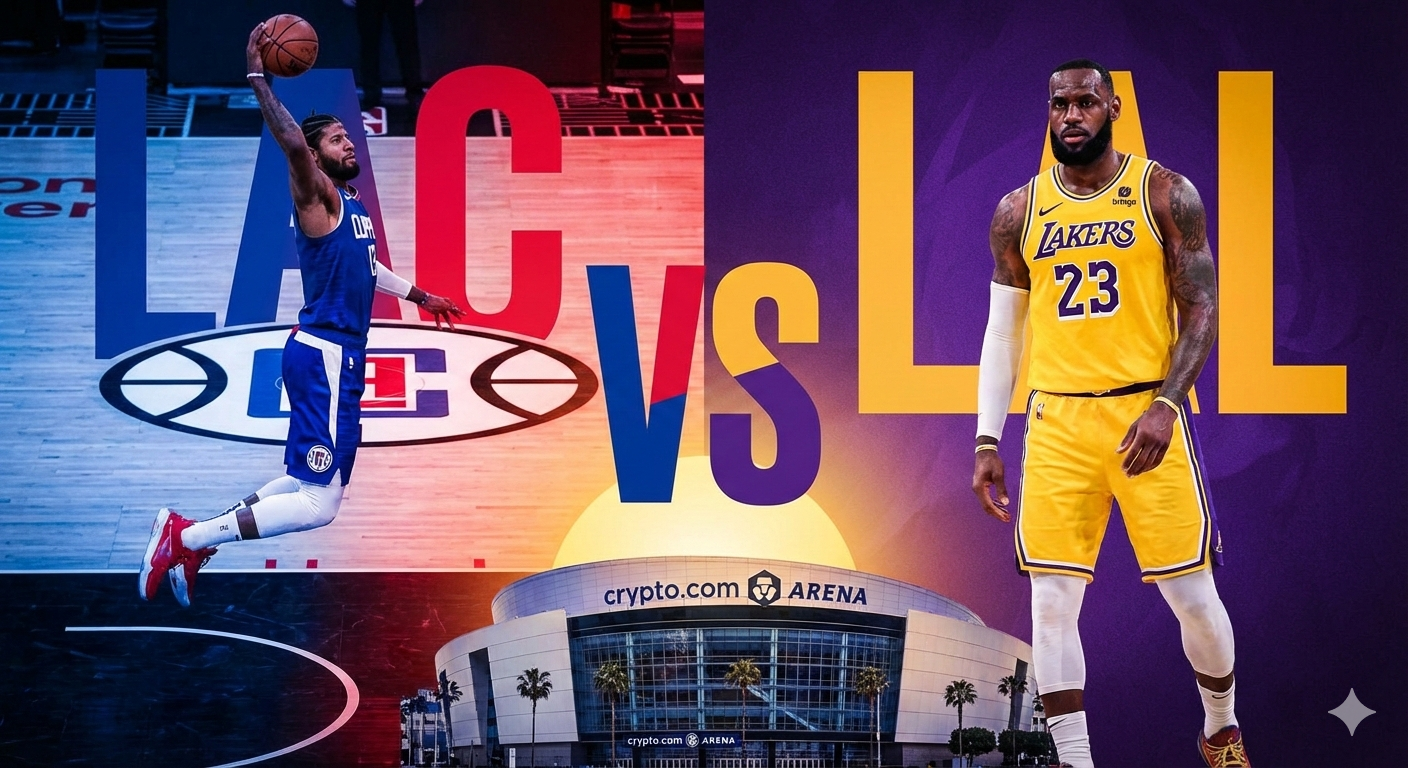
Clippers vs Lakers Rivalry: Battle for Los Angeles
Clippers vs. Lakers: A Rivalry Built on Shadow, Spotlight, and the Soul of Los Angeles
There are rivalries born of geography. There are rivalries born of playoff collisions. And then there is the one that lives and breathes in the same hallway, under the same rafters, in the same city where palm trees sway and banners hang heavy with history.
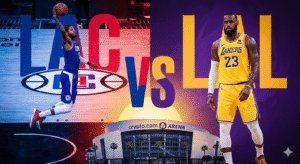
The rivalry between the Los Angeles Lakers and the Los Angeles Clippers is not just about basketball. It is about identity. It is about inheritance and rebellion. It is about Hollywood royalty and blue-collar ambition sharing a stage neither fully wants to concede.
I’ve covered this league long enough to know that not all rivalries are created equal. Some are defined by decades of playoff blood. Others are defined by proximity. But this one — this hallway rivalry — is defined by something more psychological: one franchise guarding a throne, the other building its own.
To understand it fully, you have to start long before the tip-offs and Christmas Day matchups. You have to start with legacy.
The Lakers: Showtime, Gold, and the Weight of Banners
The Lakers did not merely arrive in Los Angeles — they defined it.
From the moment the franchise moved west from Minneapolis in 1960, it aligned itself with the glamour and scale of the city. But it was the 1980s that crystallized the brand. The arrival of Magic Johnson didn’t just change the Lakers; it changed the way basketball felt.
“Showtime” wasn’t a marketing slogan. It was a rhythm. Fast breaks that felt choreographed. No-look passes that defied geometry. The Forum crowd rising before the ball even left Magic’s hands. It was basketball with a smile — confidence bordering on audacity.
The Lakers of the ’80s weren’t just winning championships; they were performing them. They won five titles in that decade, building an identity of speed, creativity, and swagger that matched Los Angeles itself. In a city obsessed with stars, the Lakers became the brightest constellation.
Then came another era of dominance — one that replaced flash with force.
When Kobe Bryant and Shaquille O’Neal joined forces, the league shifted again. This was not Showtime. This was inevitability.
From 2000 to 2002, the Lakers three-peated. Shaq was a physical phenomenon, overwhelming defenders with power rarely seen in NBA history. Kobe, young and relentless, played with a hunger that felt personal. Their partnership was combustible, brilliant, and unsustainable — but for three years, it was unstoppable.
Covering those Finals runs, you felt the gravitational pull of expectation. Lakers fans didn’t hope for championships; they assumed them. The rafters inside what is now Crypto.com Arena filled with banners as if space would simply keep expanding to accommodate them.
Even after Shaq’s departure, Kobe’s second act delivered two more titles in 2009 and 2010, cementing the Lakers as a franchise that regenerates greatness. Through eras, through rosters, through coaches — the expectation remained the same.
Championship or bust.
That’s the inheritance the Clippers walked into.
The Clippers: A Franchise in the Shadows
The Clippers’ history in Los Angeles reads like a counter-narrative.
While the Lakers were hoisting trophies, the Clippers were fighting for relevance. For much of the 1980s and ’90s, the Clippers were defined less by their players and more by dysfunction. Poor records. Lottery picks that didn’t pan out. A reputation for instability.
They weren’t just the “other team” in Los Angeles. They were an afterthought.
I remember covering early-2000s games where the building would fill with Lakers jerseys even when the Clippers were technically the home team. The banners belonged to one franchise. The city’s emotional capital belonged to one franchise.
But beneath the surface, something was building.
Lob City: When the Clippers Found Their Voice
The transformation began in earnest when Chris Paul arrived in 2011.
Pair him with Blake Griffin — already a human highlight reel — and DeAndre Jordan anchoring the paint, and suddenly the Clippers weren’t a punchline.
They were appointment viewing.
“Lob City” wasn’t just a nickname; it was a declaration. Alley-oops that seemed to scrape the scoreboard. Fast breaks punctuated by thunderous finishes. Griffin’s dunks shook the arena in ways that felt symbolic — as if the franchise itself was trying to rattle the narrative loose.
Under Paul’s orchestration, the Clippers became disciplined, surgical in the half-court, devastating in transition. From 2012 to 2017, they were consistently among the Western Conference’s top teams.
But here’s the thing about the Western Conference in that era: it was ruthless.
Despite regular-season success, the Clippers couldn’t break through to the Conference Finals. Playoff collapses — particularly the infamous 2015 series against Houston — became part of the storyline.
The Lakers, meanwhile, were struggling through a post-Kobe transition. For the first time in decades, the hallway felt balanced — not because the Clippers had overtaken the Lakers historically, but because the Lakers were vulnerable.
For a brief stretch, the Clippers owned Los Angeles on the court.
But history is a stubborn thing.
LeBron Arrives, and the Balance Shifts Again
When LeBron James signed with the Lakers in 2018, the city tilted back toward gold.
LeBron didn’t just bring talent; he brought narrative gravity. The league’s biggest star choosing the Lakers reaffirmed what many believed: when it comes to brand power, the Lakers still hold an unmatched pull.
The addition of Anthony Davis in 2019 completed the puzzle. In the pandemic-altered 2020 season, the Lakers captured their 17th championship in the Orlando bubble. It wasn’t won inside Staples Center — but it carried the weight of tradition.
The Clippers responded with ambition of their own.
That same summer of 2019, they signed Kawhi Leonard fresh off a championship in Toronto and traded for Paul George. It was a coup. A declaration that the Clippers were done waiting.
For the first time in NBA history, two legitimate title contenders shared an arena, separated only by locker rooms and lighting schemes.
Every matchup felt like a referendum.
The Psychological War for Los Angeles
Here’s what makes this rivalry unique: it’s not fueled by decades of playoff meetings. It’s fueled by proximity and perception.
When the Lakers and Clippers share the same building, the air feels different. Lakers games glow warmer — literally and figuratively — with championship banners overhead. Clippers games often carry an edge, a sense of proving.
Fan culture reflects this divide.
Lakers fans inherit their allegiance. It’s generational. Grandparents remember Showtime. Parents remember Kobe. The identity is woven into family stories.
Clippers fans often choose their team. It’s an act of defiance or authenticity. A badge of loyalty forged through lean years.
That psychological dynamic — legacy versus self-made identity — is the heartbeat of the rivalry.
Tactical Chess: Breaking Down the Matchups
On the court, these teams have offered fascinating stylistic contrasts.
The Lakers, particularly during their 2020 run, leaned on size and interior dominance. Davis as a two-way anchor. LeBron as a point forward orchestrating half-court offense. Defensively, they prioritized rim protection and transition scoring.
The Clippers, under Leonard and George, built around wing versatility. Switch-heavy defense. Isolation scoring from elite shot creators. Floor spacing to maximize driving lanes.
Statistically, their head-to-head battles often hinge on pace and efficiency. When the Lakers control tempo and dominate the paint, they dictate terms. When the Clippers spread the floor and turn games into half-court execution battles, their wings thrive.
These aren’t just games. They’re strategic arguments.
Ownership and Identity: The Ballmer Effect
The arrival of Steve Ballmer as Clippers owner in 2014 altered the franchise’s trajectory in ways that go beyond payroll.
Ballmer brought energy — visible, loud, unapologetic. But more importantly, he brought infrastructure investment and cultural reset. The Clippers began operating like a premier franchise.
And now, with their move into a new arena separate from Crypto.com Arena, the symbolic separation is complete. For decades, the Clippers lived in the Lakers’ house. Now they are building their own.
That matters.
Because rivalries need independence to flourish fully.
Memorable Moments That Defined the Rivalry
Though they haven’t met in the playoffs, their regular-season clashes have produced unforgettable scenes:
-
Opening night 2019: Kawhi versus LeBron in a game dripping with subtext.
-
Christmas Day battles that felt like Western Conference Finals previews.
-
The night the Clippers unveiled black jerseys in a building draped in purple history.
Each game layered new meaning onto the rivalry.
The Media Machine and the Hype Cycle
In Los Angeles, narratives travel fast.
Sports talk radio dissects every turnover. National media frames every matchup as a referendum on city supremacy. Social media amplifies every quote.
But beneath the noise lies something more subtle: respect.
Players from both sides understand the stakes. Even when they downplay the rivalry publicly, their intensity tells the truth.
What This Rivalry Really Means
At its core, Clippers vs. Lakers is a story about transformation.
It’s about whether legacy guarantees permanence. It’s about whether sustained excellence can be challenged by strategic reinvention.
The Lakers represent basketball aristocracy — banners, icons, expectation.
The Clippers represent modern ambition — analytics, infrastructure, self-definition.
In a league constantly evolving, this rivalry mirrors the NBA’s broader tension between tradition and innovation.
And as both franchises move forward — one guarding its history, the other building its own — the battle for Los Angeles remains unfinished.
Because rivalries aren’t measured only in championships.
They’re measured in belief.
And in Los Angeles, belief runs deep — in purple and gold, and in red, white, and blue.
The hallway may no longer be shared forever. The arenas may differ. But the city will always ask the same question: