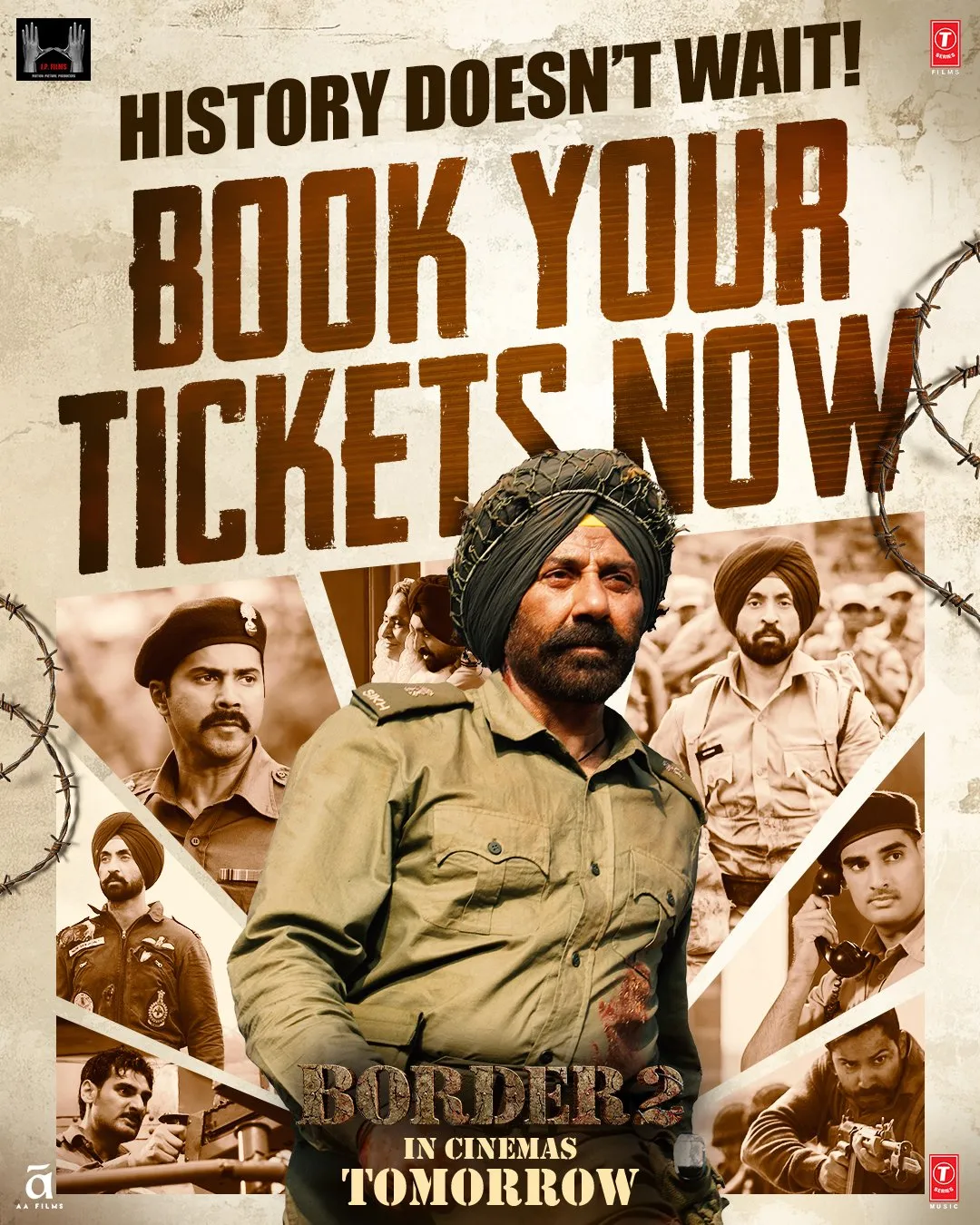
Border 2 Public Review: Honest Audience Reaction, Emotional Impact & Final Verdict
Border 2 Public Review: A War Film That Carries the Weight of Memory, Patriotism, and Expectation
Introduction: When a Film Carries a Nation’s Emotional Baggage
Some films release quietly. Others arrive with noise, marketing, and social media frenzy. And then there are films like Border 2 — films that arrive with history.
The moment the title Border 2 was announced, reactions were instant and emotional. For Indian audiences, Border is not just a 1997 war film. It is memory. It is childhood. It is the echo of “Sandese Aate Hain” playing on Doordarshan. It is fathers explaining the 1971 war to their children. It is school debates, Republic Day screenings, and goosebumps that never quite faded.
So Border 2 does not enter theatres as a normal sequel. It enters carrying decades of expectation, nostalgia, and emotional ownership from the audience.
This is not just a movie people want to enjoy.
This is a movie people want to feel proud of.
The biggest question before release was never about box office numbers or star power. It was simple, yet terrifying for the makers:
Can Border 2 live up to Border?
This review looks at Border 2 not as a marketing product, but as a cinematic experience, a public emotion, and a patriotic statement — through the lens of storytelling, performances, music, visuals, and audience reaction.
The Legacy of Border (1997): Why the Sequel Was Always Risky
Before judging Border 2, one must understand what Border (1997) represented.
The original Border was not perfect cinema. It had melodrama, long runtime, and old-school patriotism. But what it had — and what most war films still chase — was honesty.
-
Soldiers felt like sons, not superheroes
-
Patriotism felt emotional, not aggressive
-
Sacrifice felt human, not cinematic
For many Indians, Border was the first war film that made them cry without embarrassment.
Making a sequel after so many years is dangerous because:
-
Nostalgia is unforgiving
-
Audiences compare emotionally, not logically
-
One wrong tone can turn pride into anger
Border 2 enters this space knowing that even a good film may not be enough — it must feel true.
Story Overview (Spoiler-Free): Familiar Ground, New Emotional Territory
Border 2 does not try to reinvent the war-film genre. And that is both its strength and its gamble.
At its core, the story revolves around:
-
Soldiers stationed at a vulnerable border region
-
Rising geopolitical tension
-
A looming conflict that threatens lives, morale, and national security
The narrative focuses not only on the battlefield, but also on:
-
The mental pressure soldiers carry
-
The families waiting back home
-
The quiet fear behind brave faces
Unlike many modern patriotic films that lean heavily into chest-thumping nationalism, Border 2 attempts to walk a balanced emotional line — showing courage without denying fear, and patriotism without removing humanity.
The film avoids unnecessary subplots and keeps its focus tight on:
-
Brotherhood among soldiers
-
Leadership under pressure
-
The cost of duty
Importantly, the story respects the intelligence of the audience. It does not spoon-feed emotions. Instead, it allows silence, pauses, and understated moments to do the heavy lifting.
Direction & Screenplay: Restraint Over Spectacle
One of the most noticeable aspects of Border 2 is its controlled direction.
In an era where war films often chase scale over soul, Border 2 surprisingly slows down when needed. The director understands that tension is not always loud.
Direction Highlights:
-
Long takes during pre-battle moments
-
Focus on faces rather than explosions
-
Minimal background score during emotional scenes
The screenplay is structured carefully, dividing the film into:
-
Setup and emotional grounding
-
Rising tension and preparation
-
Conflict and consequences
The pacing may feel deliberate — even slow — for audiences expecting constant action. But for those who appreciate realism, this works in the film’s favor.
Where the screenplay succeeds:
-
Building emotional investment
-
Giving characters space to breathe
Where it slightly struggles:
-
Some repetitive emotional beats
-
A few predictable turns
Yet, overall, the writing respects the genre and the legacy it inherits.
Performances: When Acting Feels Less Like Acting
War films live or die by performances. And Border 2 understands this deeply.
Lead Performances
The lead actors do not play “heroes” in the traditional sense. They play soldiers — tired, determined, conflicted.
-
The commanding officer role is portrayed with authority without arrogance
-
Younger soldiers bring vulnerability and raw energy
-
Emotional breakdowns feel earned, not forced
One standout aspect is how the actors handle silence. Some of the most powerful moments come without dialogue — just expressions, glances, and controlled breathing.
Supporting Cast
The supporting cast adds texture:
-
A soldier writing letters home
-
A quiet veteran who has seen too much
-
A first-timer trying to hide fear
These characters may not dominate screen time, but they stay with the audience long after the scene ends.
Public reaction in theatres often reflected this:
-
Audible sniffles during emotional moments
-
Complete silence during key scenes
-
Applause not for action, but for sacrifice
Music & Background Score: Emotion Over Noise
One of the biggest fears surrounding Border 2 was music.
How do you follow songs that became national memory?
Instead of trying to recreate “Sandese Aate Hain,” the film wisely chooses emotional continuity, not imitation.
Songs
-
Patriotic songs are used sparingly
-
Lyrics focus on longing, duty, and hope
-
Songs blend into the narrative instead of interrupting it
Background Score
The background score deserves special mention:
-
Subtle during dialogue-heavy scenes
-
Intensifies only when necessary
-
Avoids over-dramatization
Public response to the music has been largely positive, especially among older audiences who appreciate restraint over remix culture.
Cinematography & War Sequences: Realism Takes the Front Seat
Visually, Border 2 avoids glossy heroism.
The color palette is muted:
-
Dusty browns
-
Washed-out greens
-
Cold night blues
This gives the film a grounded, documentary-like feel.
Battle Scenes
-
Focus on confusion rather than choreography
-
Gunfire feels chaotic, not cinematic
-
No slow-motion glorification of death
The use of VFX is controlled and blended well with practical effects. Explosions feel dangerous, not decorative.
Audience reactions during battle scenes were telling:
-
Leaning forward in seats
-
No celebratory whistles
-
Quiet tension
This is not war as entertainment. This is war as experience.
Emotional & Patriotic Impact: Goosebumps Without Gimmicks
Perhaps the most important measure of Border 2 is emotional impact.
Does it make you feel proud without making you angry?
Does it honor soldiers without turning war into propaganda?
For most viewers, the answer is yes.
Key emotional triggers:
-
Letters from home
-
Final conversations before battle
-
Acts of selfless courage
The film understands that true patriotism is quiet. It lies in duty fulfilled, not slogans shouted.
In many theatres, audiences stood silently during key moments — not because they were told to, but because emotion demanded it.
Public Review & Audience Response: Ground Reality
Families & Older Audiences
-
Strong emotional connection
-
Appreciation for respectful storytelling
-
Nostalgic yet satisfied
Youth & First-Time Viewers
-
Mixed reactions
-
Some expected more action
-
Many appreciated realism after reflection
Veterans & Defence Families
-
Praise for authenticity
-
Appreciation for restrained portrayal
-
Emotional resonance
On social media, reactions were divided but thoughtful:
-
“Not a mass film, but an honest one”
-
“Slow but powerful”
-
“Makes you think after you leave the theatre”
Strengths of Border 2
✔ Emotional authenticity
✔ Strong performances
✔ Respectful patriotism
✔ Realistic war portrayal
✔ Mature direction
Weaknesses & Criticism
✖ Slow pacing for some viewers
✖ Predictable moments
✖ Limited commercial elements
These flaws do not break the film, but they may limit its mass appeal.
Comparison with Other Patriotic Films
Unlike URI or Shershaah, Border 2 avoids high-octane nationalism. It aligns more closely with:
-
Border (1997)
-
LOC Kargil
-
Haider (in emotional restraint, not theme)
It chooses depth over thrill.
Final Verdict: Who Should Watch Border 2?
Border 2 is not for everyone.
If you want:
-
Loud nationalism
-
Fast-paced action
-
Hero worship
This may not satisfy you.
But if you want:
-
Emotional honesty
-
Respect for soldiers
-
A film that stays with you
Then Border 2 is worth your time.