Jimmy Butler: From Homeless Teen to NBA Playoff Legend | The True Story of Grit
Jimmy Butler: Forged by Fire, Defined by Will
Introduction: More Than a Superstar
There are NBA stars who shine because of talent, and then there are stars who burn because of pain. Jimmy Butler belongs firmly to the second category. His game is not built on flash, effortless grace, or highlight-reel elegance. It is built on defiance. On proving people wrong. On a deep, personal refusal to be broken by circumstance.
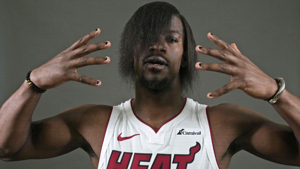
When Jimmy Butler walks onto the court, you don’t just see a basketball player. You see intensity. You see confrontation. You see a man who treats every possession like a personal challenge. To some, he is difficult. To others, demanding. To those who truly understand basketball and life, he is something else entirely: authentic.
Butler does not smile for the camera. He doesn’t soften his edges to be more marketable. He doesn’t chase universal approval. He chases standards. And he demands that everyone around him either meet those standards or step aside.
To understand Jimmy Butler—the leader, the playoff assassin, the cultural icon—you must understand where he came from. Because his story is not one of privilege, destiny, or early superstardom. It is the story of survival.
A Childhood Built on Survival
Jimmy Butler’s life began not with promise, but with instability.
Born in Houston, Texas, in 1989, Butler’s early years were marked by absence and rejection. His father left the family when Jimmy was still an infant. That wound, though invisible, would shape him deeply. But what followed would define him even more.
When Jimmy was just 13 years old, his mother told him words no child should ever hear: “I don’t like the way you look. You gotta go.” In that moment, childhood ended. Butler was homeless.
For years, he bounced from house to house, sleeping on couches, staying with friends, sometimes unsure where he would spend the night. Hunger, insecurity, and uncertainty became normal. There was no safety net. No guarantee of tomorrow.
But here’s the thing about Jimmy Butler: he didn’t fold.
Instead, he adapted. He learned to survive in unfamiliar environments. He learned to read people. He learned how to fight silently. These weren’t basketball skills, but they would later translate directly into his on-court demeanor.
One family changed everything: the Lamberts. Jordan Leslie, a future NFL player, befriended Jimmy and invited him into his home. Michelle Lambert welcomed Butler like a son, asking only one thing in return—respect. It was the first sense of structure Butler had experienced in years.
Basketball was there, but it wasn’t yet the center of his life. Survival was.
Late Bloomer: The Road No One Believed In
Unlike many NBA stars, Jimmy Butler was not a teenage prodigy. He wasn’t a McDonald’s All-American. He wasn’t heavily recruited. He wasn’t celebrated.
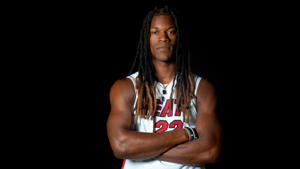
He was overlooked.
In high school, Butler showed promise but lacked polish. College recruiters passed. Big programs weren’t interested. So Butler took the long way—the way only the stubborn survive.
He enrolled at Tyler Junior College in Texas. Junior college basketball is unforgiving. There are no guarantees. No glamour. Just endless bus rides, small gyms, and players desperate for a second chance.
But Butler thrived there. His work ethic separated him. His defense stood out. His hunger was undeniable.
Eventually, Marquette University took a chance on him.
At Marquette, Butler didn’t dominate immediately. He improved incrementally. Every year, he added something—better shooting, stronger defense, more confidence. He didn’t explode; he evolved.
That would become the theme of his career.
Entering the NBA: Draft Night and Doubt
The 2011 NBA Draft came and went quietly for Jimmy Butler.
He was selected 30th overall by the Chicago Bulls—the final pick of the first round. There were no headlines. No expectations. Just another role player entering a league filled with stars.
In Chicago, Butler didn’t walk into opportunity. He earned it.
Under head coach Tom Thibodeau, playing time was sacred. Defense was mandatory. Mistakes were punished. Butler embraced it.
He started at the bottom—guarding the best opposing wing players, diving for loose balls, doing the dirty work. Offense came later.
Slowly, teammates noticed something different about him. He never took a possession off. He practiced harder than anyone. He absorbed coaching like a sponge.
Jimmy Butler was becoming something more.
Chicago Bulls: Becoming a Star the Hard Way
Chicago is where Jimmy Butler transformed from role player to star.
The Bulls were built around Derrick Rose, but Butler carved out his own identity. While Rose dazzled with speed and flair, Butler imposed his will with physicality and effort.
Under Thibodeau, Butler became one of the league’s elite defenders. He guarded multiple positions, chased shooters tirelessly, and relished difficult assignments.
Then, something unexpected happened—his offense blossomed.
Butler worked obsessively on his shooting. He refined his footwork. He learned how to draw fouls. His scoring climbed steadily, year after year.
In 2015, he was named Most Improved Player. But even that label felt insufficient. This wasn’t improvement—it was reinvention.
But with growth came tension.
As Butler’s voice grew louder in the locker room, not everyone appreciated it. He challenged teammates. He criticized effort. He demanded accountability.
Some called him a leader. Others called him a problem.
But Jimmy Butler didn’t care what he was called—as long as he was honest.
“Difficult” or “Demanding”? The Minnesota Explosion
The Minnesota Timberwolves chapter cemented Butler’s reputation as the NBA’s most polarizing star.
Minnesota had talent—Karl-Anthony Towns, Andrew Wiggins—but lacked urgency. Butler arrived and immediately noticed the gap.
He pushed. He criticized. He challenged.
And then came the infamous practice.
With third-string players, Butler reportedly demolished the starters, yelling at management afterward: “You need me!” The story exploded across the league.
To critics, Butler was toxic.
To supporters, he was right.
Minnesota wanted the success without the sacrifice. Butler wanted the sacrifice first.
The relationship was doomed. Butler was traded, but the moment defined him forever. He wasn’t just a player anymore—he was a symbol of uncompromising standards.
Philadelphia: A Glimpse of Playoff Jimmy
In Philadelphia, the world saw what Jimmy Butler could be when the stakes were highest.
During the 2019 playoffs, Butler took over games. He made clutch shots. He defended elite scorers. He became the Sixers’ emotional leader almost overnight.
His duel with Kawhi Leonard was legendary. His confidence was unshakeable.
And yet, Philadelphia let him walk.
They chose comfort over confrontation. Fit over fire.
Miami did not make that mistake.
Miami Heat: Finding a Home
When Jimmy Butler joined the Miami Heat, something clicked.
Heat culture—discipline, conditioning, accountability—matched Butler’s DNA perfectly. For the first time, he didn’t have to fight the system. He became the system.
Pat Riley respected him. Erik Spoelstra trusted him. Teammates followed him.
In the 2020 NBA Bubble, Butler delivered one of the greatest Finals performances in history. Triple-doubles. Forty-point games. Exhaustion etched into his face.
Miami didn’t win the championship—but Butler won something else: universal respect.
Playoff Jimmy: When the Lights Are Brightest
There is Jimmy Butler in the regular season.
And then there is Playoff Jimmy.
In the playoffs, Butler transforms. He scores more. Defends harder. Leads louder. The moment does not scare him—it energizes him.
The 2023 playoff run was his masterpiece. As an eighth seed, the Heat toppled giants. Butler dismantled Milwaukee. He dominated Boston. He carried belief like a weapon.
Every possession mattered. Every minute was personal.
This is why fans adore him. Not because he always wins—but because he never hides.
Leadership, Work Ethic, and Obsession
Jimmy Butler’s leadership is not gentle.
He calls people out. He expects professionalism. He believes excuses are contagious.
But behind the intensity is care. Butler pushes because he believes. He demands because he wants greatness.
His workouts are legendary. His conditioning unmatched. His preparation meticulous.
He doesn’t ask teammates to do what he won’t do himself.
Off the Court: The Man Behind the Scowl
Off the court, Jimmy Butler is surprisingly playful.
His “Big Face Coffee” venture during the bubble became iconic. His fashion choices are bold. His interviews are blunt, often hilarious.
He is not the villain many paint him to be.
He is simply honest.
Critics, Respect, and Legacy
Jimmy Butler will never be universally loved.
And that’s fine with him.
His legacy is not built on MVP trophies or scoring titles. It is built on impact. On belief. On fire.
He is a Hall of Famer not because of stats alone—but because of meaning.
Conclusion: A Star Forged, Not Given
Jimmy Butler was not chosen.
He was forged.
Through rejection. Through hunger. Through doubt. Through fire.
He represents something rare in modern sports: authenticity without apology.
And that is why Jimmy Butler matters.
Not just to basketball.
But to anyone who has ever been told they were not enough—and decided to prove otherwise.