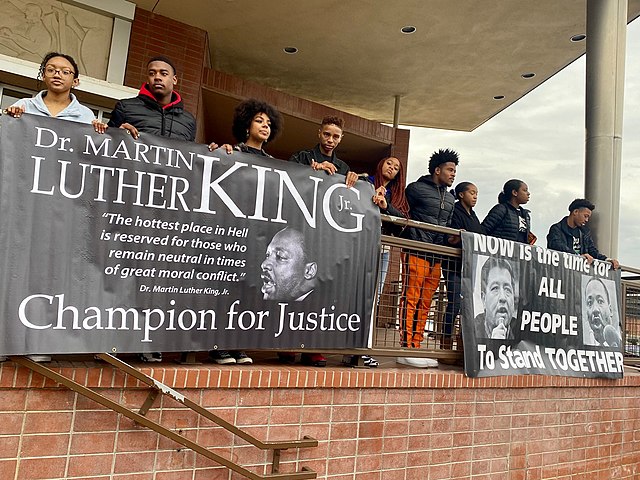
“Dr. Martin Luther King Jr. Day: History, Legacy, and Why His Dream Still Matters Today”
Dr. Martin Luther King Jr. Day: A Legacy of Courage, Compassion, and the Unfinished Journey
Every January, the United States pauses to honor one of the most influential moral leaders in modern history — Dr. Martin Luther King Jr. But Dr. King Day is more than a date on the calendar or another federal holiday. It is a reminder, a lesson, a mirror reflecting what the world is — and what it must become.
This day forces us to think deeply:
What does justice look like?
How do we respond to hate?
Do we remain silent, or do we speak even when our voice shakes?
Dr. King’s life was not simply about speeches or marches. It was about courage in the face of danger, compassion in the face of hatred, and vision in a time of darkness. Understanding Martin Luther King Jr. Day requires moving beyond textbook summaries and stepping into the emotional, human reality of a man who lived for a dream he never lived to see fully realized.
In this article, we explore not only what Dr. King did, but who he was — a preacher, strategist, philosopher, husband, father, activist, and ultimately a martyr for justice. And perhaps most importantly, we explore how his message echoes into our world today.
Let us walk through his story with depth, sincerity, and the reverence it deserves.
1. The Human Behind the Icon: Early Life and Formation
Before Dr. King became a national figure, he was simply Michael King Jr., born on January 15, 1929, in Atlanta, Georgia. His father later changed both their names to Martin Luther King to honor the 16th-century reformer.
King grew up in a world where the social lines of segregation were drawn clearly and violently. He couldn’t sit at certain counters, couldn’t attend certain schools, couldn’t play in certain parks. But despite this harsh world, his home was filled with love, discipline, music, and faith.
He was raised in the heart of the Black church — a place not only of worship but of community, debate, intellectual growth, and resistance against oppression. The church was the foundation where his voice was first shaped and where his sense of justice was born.
But even as a child, King experienced trauma. At just six years old, a white friend told him they could no longer play because of segregation. As a teenager, King witnessed racism so deeply that he sometimes doubted the goodness of humanity. Yet he transformed this pain into purpose.
There is something profoundly human in the way King grew from a boy who knew injustice into a man committed to healing it.
2. Education, Philosophy, and the Birth of a Leader
Dr. King was not only emotionally intelligent — he was academically gifted. He skipped grades, entered college at 15, and pursued theology with extraordinary passion.
His intellectual influences were wide and deep:
-
Mahatma Gandhi, whose philosophy of nonviolence became King’s moral backbone.
-
Henry David Thoreau, whose work on civil disobedience shaped King’s activism.
-
The Bible, which gave him spiritual grounding and his poetic, prophetic voice.
-
Black scholars and pastors, whose lived experience connected theory to reality.
King became a bridge between worlds — a scholar who could speak to the common worker, a pastor who could debate philosophers, and a Black man who could challenge systems rooted in centuries of oppression.
His education shaped his belief that:
“Injustice anywhere is a threat to justice everywhere.”
This was not just a slogan — it was a worldview.
3. The Montgomery Spark: Rosa Parks and the Movement Begins
The Civil Rights Movement did not begin with a government meeting or a political plan. It began with a quiet act of courage from a woman who refused to give up her seat — Rosa Parks, in December 1955.
At 26 years old, Martin Luther King Jr. was chosen to lead the Montgomery Bus Boycott. He did not seek the spotlight; the spotlight found him.
King’s first major speech during the boycott revealed the core of his leadership — moral clarity, emotional depth, and unwavering resolve:
“We will meet physical force with soul force.
We will not hate you.
We cannot in all good conscience obey your unjust laws.”
These words were not delivered from a place of comfort. King’s home was bombed. He received daily death threats. Yet he continued.
For 381 days, thousands of Black residents walked instead of riding buses. The boycott ended with a Supreme Court decision declaring segregation on buses unconstitutional.
This was the first major victory of the Civil Rights Movement — and the nation realized a leader had risen.
4. Nonviolence as a Way of Life — Not a Strategy
Dr. King’s commitment to nonviolence is often misunderstood as passive. It wasn’t. It was radical, courageous, and disciplined.
Nonviolence for King meant:
-
Resisting oppression without becoming the oppressor.
-
Holding a moral mirror to society.
-
Transforming enemies into allies when possible.
-
Refusing to let hatred poison the soul.
He often said:
“Hate cannot drive out hate; only love can do that.”
To many people living under brutality, these words were hard to accept. Some believed violence was the only language oppressors understood. King knew this debate was real and painful. Yet he remained committed to nonviolence because he believed violence would only create cycles of revenge.
He chose love not because it was easy, but because it was necessary.
5. Birmingham: Fire, Water, and Global Eyes
In 1963, King moved the movement’s center to Birmingham, Alabama — one of the most segregated, violent cities in America. What happened there changed global history.
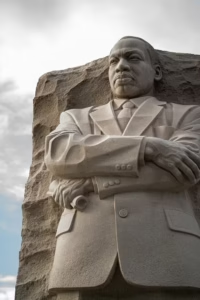
Children were attacked by police dogs.
Protesters were blasted with fire hoses.
Peaceful marchers were beaten and arrested.
King himself was thrown into jail — and it was there he wrote one of the most important documents of the 20th century:
“Letter from Birmingham Jail.”
It was a message not to extremists, but to moderates, to those who claimed to support justice but preferred “order” over change.
He wrote:
“For years now I have heard the word ‘Wait!’
It rings in the ear of every Negro with piercing familiarity.
This ‘Wait’ has almost meant ‘Never.’”
That letter shook the conscience of the nation. It forced people to confront their silence.
And it prepared the world for what came next.
6. The March on Washington: “I Have a Dream”
On August 28, 1963, more than 250,000 people gathered at the Lincoln Memorial for the March on Washington for Jobs and Freedom.
Dr. King’s speech that day remains one of the most famous in human history. But what many people don’t know is that the “I Have a Dream” portion was not fully scripted. Gospel singer Mahalia Jackson cried out:
“Tell them about the dream, Martin!”
And King shifted into the poetic vision that made history:
“I have a dream that one day my four little children
will not be judged by the color of their skin
but by the content of their character.”
It was a dream rooted not in fantasy, but in hope — hope that justice could become real.
7. The Civil Rights Act and Voting Rights Act: Victory and Sacrifice
King’s activism directly influenced the passing of two major laws:
✔ Civil Rights Act of 1964
Banned discrimination in public places and employment.
✔ Voting Rights Act of 1965
Protected Black Americans’ right to vote.
These victories were not gifts from politicians. They were earned through marches, jail cells, beatings, and deaths of ordinary people who refused to surrender.
But the movement was far from over.
8. The Man Behind the Mission: Family, Fear, and Faith
Dr. King was not a superhero. He struggled. He felt fear. He battled doubts. He faced criticism even from fellow activists. He lived under constant threat; the FBI monitored him relentlessly.
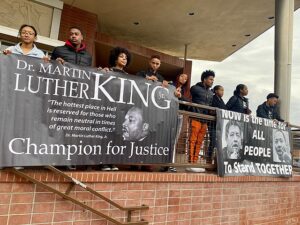
Yet he continued because he believed his life’s purpose was bigger than his fear.
He once said:
“If a man has not discovered something that he will die for,
he isn’t fit to live.”
He loved his wife Coretta. He adored his children. He wanted to watch them grow. But he kept marching because millions of children — Black and white — deserved a better world.
This human vulnerability makes his courage even more extraordinary.
9. The Final Years: Beyond Civil Rights
In his last years, King expanded his mission beyond racial justice. He spoke against poverty and the Vietnam War. Many allies abandoned him because of these stands.
He understood that:
-
Justice cannot be selective.
-
Poverty is violence without bullets.
-
War without purpose is moral failure.
He was planning the Poor People’s Campaign when he traveled to Memphis in April 1968 to support striking sanitation workers.
And then, on April 4, everything changed.
10. The Assassination and the Unbreakable Legacy
Dr. Martin Luther King Jr. was assassinated at the Lorraine Motel.
He was just 39 years old.
When the news spread, people cried openly in the streets. Cities erupted in grief and rage. The world lost not only a leader, but a moral compass.
Yet his death did not silence his message. It amplified it.
His life became a symbol of:
-
Courage
-
Compassion
-
Resistance
-
Faith
-
Hope
-
Justice
And his dream outlived him.
11. Why the Holiday Exists — and What It Means
Dr. Martin Luther King Jr. Day became a U.S. federal holiday in 1983. But it didn’t happen easily. For years, many resisted honoring him. Some states refused to observe the day until the 2000s.
But today, the holiday stands as a national reminder to ask ourselves:
-
Are we choosing justice over comfort?
-
Are we speaking up when it matters?
-
Are we treating others with dignity?
-
Are we fighting racism in all its forms?
MLK Day is not meant to be passive.
It is meant to be a day of service, action, reflection, and accountability.
It calls us to continue the work he began.
12. Dr. King’s Relevance Today — A Mirror to Our Time
More than 50 years after his death, the issues Dr. King fought still exist:
-
Racism
-
Inequality
-
Police violence
-
Poverty
-
Discrimination
-
Divisive politics
His dream is not fully realized.
But his vision still guides us.
Young people quote him at rallies.
Teachers share his words in classrooms.
His speeches go viral every year.
Why?
Because his message is timeless:
“The arc of the moral universe is long,
but it bends toward justice.”
But only if we are the ones bending it.
13. The Dream Lives in Our Actions
Dr. Martin Luther King Jr. Day is not only about remembering the past.
It is about shaping the future.
We honor him when we:
-
Stand up for someone who is being treated unfairly
-
Speak against racism and discrimination
-
Help someone in need
-
Vote
-
Practice kindness
-
Educate ourselves
-
Challenge injustice
-
Choose peace over violence
-
Choose truth over lies
-
Choose courage over silence
King’s dream becomes real through the choices we make every day.
14. A Final Reflection: The Work Continues
Dr. Martin Luther King Jr. didn’t dream for a day — he dreamed for generations.
His dream is not a soft idea. It is a call to action. A challenge. A mission. A responsibility.
His life teaches us:
-
Ordinary people can do extraordinary things.
-
Love is stronger than hate.
-
Courage is stronger than fear.
-
Justice is worth fighting for.
-
Peace is possible.
-
And the dream lives on in each of us.
Let us honor him not just with speeches, but with action.
Because the dream is not finished.
Because the work is not over.
Because the world still needs what King gave:
Hope. Courage. Justice. Love.