Venezuela: A Nation of Riches, Resilience, and Revolution
Venezuela: A Nation of Riches, Resilience, and Revolution
Introduction: Venezuela Beyond the Headlines
To much of the world, Venezuela exists today as a headline — a shorthand for economic collapse, political confrontation, and mass migration. It is spoken of in numbers: inflation percentages that defy comprehension, oil production charts that plunge like falling cliffs, and migration figures that stretch into the millions. But Venezuela is not a statistic. It is a country of voices, memories, landscapes, and contradictions.
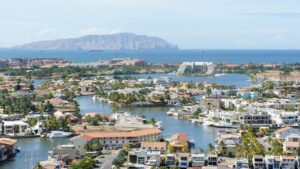
I first encountered Venezuela not through crisis, but through music drifting out of a roadside café in Mérida, the Andean air cool and sharp, the rhythm unmistakably Caribbean. Later, in Caracas, I watched office workers queue for bread at dawn, sharing jokes to soften the wait. Venezuela, even at its lowest points, resists being reduced to despair alone.
This is a nation that once embodied Latin America’s dreams of prosperity, modernity, and social mobility. It is also a nation that serves as a warning about the dangers of overdependence, polarization, and institutional decay. To understand Venezuela is to hold both truths at once — the abundance and the absence, the pride and the pain, the revolution and the reckoning.
Geography and Natural Wealth
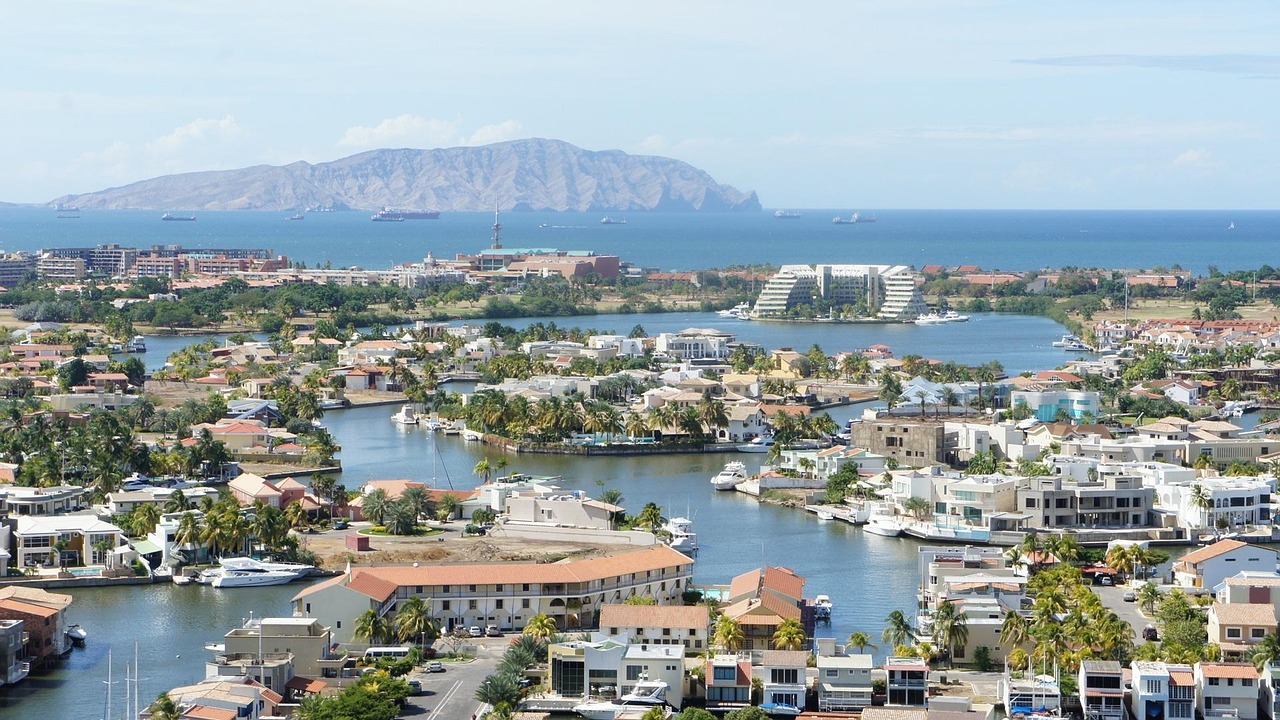
Venezuela sits on the northern edge of South America, bordered by the Caribbean Sea, Colombia, Brazil, and Guyana. Its geography is among the most diverse on the continent. Snow-capped Andean peaks give way to vast plains known as los llanos, while the dense Amazon rainforest stretches southward. To the southeast lies the Guiana Highlands, home to Angel Falls, the world’s tallest uninterrupted waterfall.
But it is beneath Venezuela’s soil where its most consequential riches lie. The country possesses the largest proven oil reserves in the world, surpassing even Saudi Arabia. In the 20th century, this geological gift transformed Venezuela into one of Latin America’s wealthiest nations almost overnight.
Oil wealth funded highways, universities, hospitals, and a burgeoning middle class. Caracas earned the nickname “the Miami of South America.” Yet abundance carried a hidden cost: an economy built too heavily on a single resource, vulnerable to global price swings and political mismanagement.
A Brief History of Venezuela
Long before oil and ideology, Venezuela was home to diverse Indigenous civilizations, including the Carib, Arawak, and Timoto-Cuica peoples. Spanish colonization in the 16th century reshaped the land through extraction, slavery, and hierarchy, laying the foundations for inequality that still echoes today.
The country’s modern identity is inseparable from Simón Bolívar, the liberator who led independence movements across much of northern South America. Bolívar envisioned a united, sovereign continent — a dream that still fuels Venezuelan political rhetoric two centuries later.
The 20th century brought relative stability under civilian governments, especially after the fall of military dictatorship in 1958. Venezuela developed democratic institutions and enjoyed oil-fueled prosperity, but corruption and inequality persisted beneath the surface.
The Oil Economy and Its Consequences
Oil was discovered in commercial quantities in the early 1900s, and by mid-century, Venezuela had become a global energy powerhouse. Petrodollars flooded the state, allowing governments to subsidize food, fuel, and imports while neglecting domestic production.
This phenomenon, often called the “resource curse,” left Venezuela dangerously exposed. When oil prices were high, the system appeared sustainable. When prices fell, the weaknesses became impossible to ignore.
Diversification was discussed endlessly but rarely implemented. Agriculture declined. Manufacturing shrank. The state became both benefactor and bottleneck. Venezuela’s wealth, paradoxically, sowed the seeds of its future crisis.
The Chávez Era and the Bolivarian Revolution
Hugo Chávez rose to power in 1999, propelled by popular anger toward elites and inspired by Bolívar’s legacy. His Bolivarian Revolution promised social justice, national sovereignty, and a redistribution of oil wealth.
For millions of Venezuelans, Chávez delivered tangible improvements. Poverty rates fell. Healthcare clinics appeared in poor neighborhoods. Education expanded. Chávez spoke in the language of the people — emotional, confrontational, unapologetic.
Yet polarization deepened. Institutions were weakened. Private enterprise shrank. Critics warned that populism was replacing sustainable governance. Supporters saw resistance as foreign interference and elite sabotage.
Chávez reshaped Venezuela permanently — both empowering and dividing it.
Venezuela Under Nicolás Maduro
When Chávez died in 2013, Nicolás Maduro inherited not just power, but an unraveling system. Falling oil prices collided with structural weaknesses. Inflation spiraled into hyperinflation. Currency controls strangled commerce. Shortages of food and medicine became routine.
International sanctions, particularly from the United States, further constrained the economy, though debate continues over how much responsibility lies with external pressure versus internal mismanagement.
Political unrest followed. Elections were disputed. Opposition leaders were jailed or exiled. Trust between government and citizens eroded. Venezuela became a geopolitical flashpoint, caught between rival global powers.
Human Stories: Life Inside Venezuela
Behind every policy failure is a human story. I met nurses earning wages worth less than a bus ticket, teachers moonlighting as street vendors, grandparents raising children whose parents had emigrated.
Hospitals lack basic supplies. Schools struggle to retain staff. Yet resilience persists. Community kitchens feed neighborhoods. Informal networks replace broken systems. Humor — dark, sharp, defiant — becomes survival.
Venezuelans endure not because suffering is tolerable, but because surrender is unthinkable.
The Migration Crisis
More than seven million Venezuelans have left their homeland — the largest migration in modern Latin American history. They walk across borders, cross jungles, sleep in bus terminals, carrying diplomas that no longer guarantee dignity.
Neighboring countries like Colombia, Peru, and Brazil absorb the shock. Families are divided across continents. Children grow up speaking to parents through phone screens.
Migration is not just economic. It is emotional exile.
Culture, Identity, and National Pride
Despite hardship, Venezuelan culture remains vibrant. Salsa and joropo fill airwaves. Arepas remain sacred. Baseball unites the nation. Beauty pageants, poetry, and street art coexist with protest slogans.
Pride endures — not blind nationalism, but a stubborn belief that Venezuela is more than its worst moment.
Venezuela’s Global Role and Foreign Relations
Venezuela occupies strategic ground in global geopolitics. Its alliances with China, Russia, and Iran counterbalance US influence in the region. Latin America watches closely, aware that Venezuela’s fate carries lessons for the entire continent.
Energy politics ensure Venezuela remains relevant, even weakened.
Current Situation and Future Outlook
Recent years have brought tentative stabilization. Dollarization has eased shortages. Limited reforms have revived parts of the private sector. But deep challenges remain: institutional trust, political reconciliation, and inclusive growth.
Can Venezuela rebuild? History suggests nations can recover — but only with accountability, dialogue, and time.
Conclusion: The Soul of Venezuela
Venezuela is wounded, but not hollow. Its story is not finished. It is written daily by citizens who endure, adapt, and hope. Rich in resources, richer still in resilience, Venezuela stands as both caution and testament — a nation still searching for balance between revolution and responsibility.