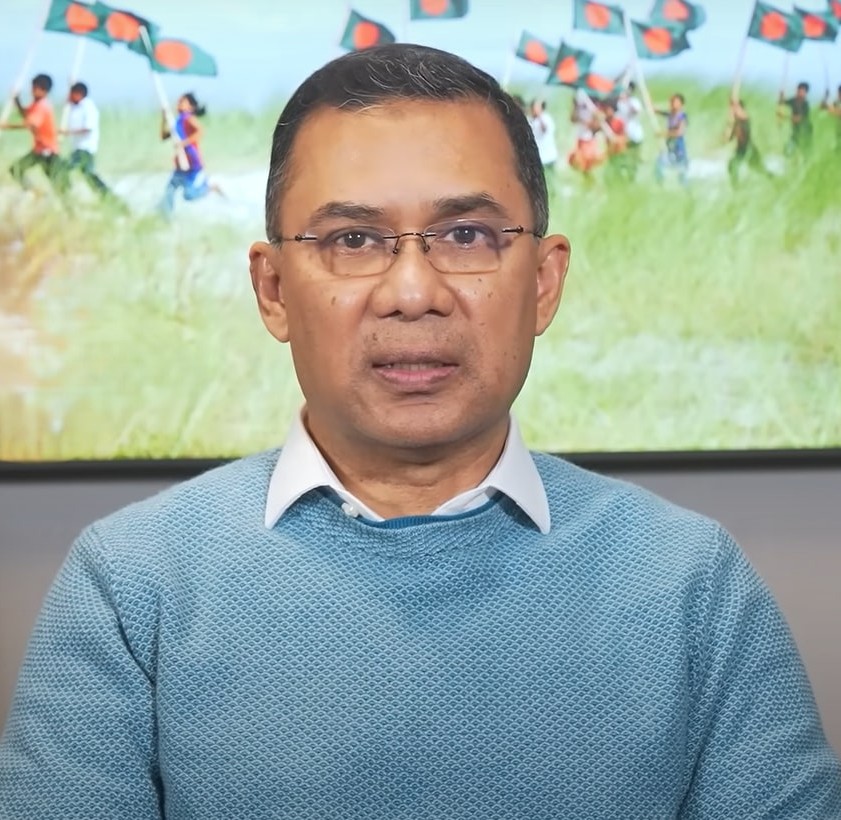
Tarique Rahman: Political Journey, Exile, Return & Bangladesh’s Future
Tarique Rahman: From Political Heir to Central Figure in Bangladesh’s Future
Tarique Rahman stands today as one of Bangladesh’s most consequential and controversial political figures — a person whose life story encompasses legacy, struggle, exile, allegations, resilience, and a dramatic return that may reshape the country’s political landscape. With his recent return after nearly 17 years abroad and his positioning as a leading contender in the February 2026 national elections, understanding his biography offers a window into the turbulent and dynamic nature of Bangladeshi politics.
I. Early Life and Family Legacy
Tarique Rahman was born on 20 November 1965 into one of Bangladesh’s most powerful political families. He is the eldest son of former President Ziaur Rahman and former Prime Minister Khaleda Zia — two towering figures who shaped national politics after Bangladesh’s liberation from Pakistan. Wikipedia+1
-
His father, Ziaur Rahman, was an army officer who rose through the ranks to become president. Ziaur Rahman helped stabilize Bangladesh in the late 1970s and founded the Bangladesh Nationalist Party (BNP) — the center-right party that remains one of the two dominant political forces in the country. Wikipedia
-
His mother, Khaleda Zia, held the office of prime minister three times and led several crucial electoral victories for the BNP. She remains a central figure in national politics even into her 80s, though health concerns have limited her active engagement. Wikipedia
Tarique grew up amidst deep political upheaval. His family endured arrest and harassment during the 1971 Liberation War as his father joined the struggle, and later he witnessed Bangladesh’s political turbulence under authoritarian regimes in the 1970s and 1980s. Bangladesh Nationalist Party
He was educated at BAF Shaheen College in Dhaka before enrolling in the Department of International Relations at the University of Dhaka in the 1980s — where he cultivated a deeper understanding of political thought and governance amid an unstable national context. Bangladesh Nationalist Party
II. Entry into Politics and BNP Leadership
Tarique Rahman formally joined the Bangladesh Nationalist Party (BNP) in 1988, at a time when the party was emerging as a key force against the military rule of Hussain Muhammad Ershad. From the outset, his involvement was more than symbolic — he worked to build grassroots support, mobilize youth, and link the party’s strategic vision with broader public concerns. Bangladesh Nationalist Party
By the early 2000s, his organizational prowess and political acumen had made him a central figure in shaping BNP strategy:
-
He helped orchestrate BNP’s sweeping victory in the 2001 general elections, which returned his mother Khaleda Zia to power. Bangladesh Nationalist Party
-
Though he never held a formal government post, he became influential in internal party reforms and campaigning approaches, establishing democratic internal elections within the party’s local units and emphasizing grassroots engagement. Bangladesh Nationalist Party
In 2002, he became Senior Joint Secretary of the BNP, and later in 2009, after BNP’s electoral defeat and successive political pressures from rival parties, he was elected Senior Vice Chairman — cementing his role as a key decision-maker and strategist. Bangladesh Nationalist Party
III. Controversies, Legal Challenges, and Exile
Tarique Rahman’s political trajectory has not been without intense controversy. During the BNP government (2001–2006), allegations of corruption, money laundering, and misuse of power increasingly surfaced in national and international discourse. Wikipedia
After a military-backed transition government assumed control in 2007, numerous cases were filed against political leaders. Tarique found himself at the center of many of these, accused of corruption and involvement in violent plots — including allegations related to the 2004 grenade attack on a political rally of rival leader Sheikh Hasina. mint
In 2008, after his arrest, he faced custodial torture and severe health issues. With court permission, he left Bangladesh to seek medical treatment in the United Kingdom, where he remained in self-imposed exile for nearly 17 years. The Business Standard
While abroad, legal convictions were entered against him in absentia, which his party maintained were politically motivated. Despite these setbacks, Rahman continued to lead the BNP from London, holding meetings, strategizing, and maintaining a degree of influence that many political analysts said helped preserve party unity even in his absence. Business Standard
IV. Life and Political Strategy in Exile (2008–2025)
During his years in the UK, Tarique Rahman remained deeply engaged in BNP politics:
-
He was elected Senior Vice Chairman of the BNP in 2009, then elevated to Acting Chairman in 2018 while his mother was imprisoned on charges that were later overturned. Business Standard
-
From London, he cultivated international connections and articulated the BNP’s policy positions — particularly urging free and fair elections and the restoration of democratic norms. The Business Standard
-
He registered a private consultancy firm in the UK in 2015, indicating efforts to maintain organizational and strategic capacities abroad. Business Standard
Despite distance, his role in guiding BNP strategy was recognized by both supporters and critics — illustrating the unique nature of his leadership as a diasporic political figure. Business Standard
V. The New Political Context: Bangladesh Since 2024
The political environment in Bangladesh underwent extraordinary change beginning in 2024:
-
Mass uprisings led by students and activists challenged the incumbent government of Sheikh Hasina, resulting in her ouster and the installation of an interim government led by Nobel laureate Muhammad Yunus. The Economic Times
-
Sheikh Hasina was later sentenced in absentia for crimes against humanity linked to violent crackdowns against protestors, and remains outside the country. AP News
-
The BNP, after years of marginalization, saw renewed momentum as the political landscape splintered and opportunities for democratic contests reemerged. The Economic Times
Amid this upheaval, the February 12, 2026 general elections were scheduled — marking the first major electoral contest in more than a decade with a changed political order. Reuters
VI. Return to Bangladesh: A Historic Homecoming (December 25 2025)
After nearly 17 years abroad, Tarique Rahman returned to Bangladesh on 25 December 2025, an event marked by massive crowds, elevated security, and intense political symbolism. Reuters+1
He arrived at Hazrat Shahjalal International Airport from London alongside his wife Dr. Zubaida Rahman, daughter Zaima Rahman, and — in a moment that captured public attention — their Siberian pet cat, Jebu. The Times of India+1
Supporters lined major routes into Dhaka, welcoming him with flags, chants, and an atmosphere likened to a national celebration. Parties and civil society figures described the moment as historic for multi-party democracy. The Business Standard+1
In his first public remarks after returning, Rahman pledged to work for peace, inclusivity, and unity — calling for cooperation across religious communities and a strengthened democratic foundation for the nation. Al Jazeera
VII. Legal Rehabilitation and the Path to Elections
A seismic shift in Bangladesh’s legal and political structures facilitated Rahman’s return:
-
In the past year, higher courts in Bangladesh have acquitted him of all major charges, including the controversial 2004 grenade attack and corruption cases that had once barred his political reengagement. Business Standard
-
These acquittals effectively removed the legal barriers that sustained his decades-long exile. Business Standard
With these changes, Rahman is expected to register as a voter at the end of December 2025 and contest the upcoming parliamentary elections — setting the stage for possibly becoming Bangladesh’s next prime minister if his party secures a majority. The Economic Times
VIII. Political Vision and Policy Positions
Upon his return, Tarique Rahman articulated key themes:
-
Restoration of democracy: He emphasized free political participation, inclusive governance, and protections for all citizens. Al Jazeera
-
Economic development: Rahman pledged to build a strong, economically resilient Bangladesh. Al Jazeera
-
Regional diplomacy: Although the BNP’s historical stance toward neighboring countries, including India, has been complex, Rahman has stated that “Bangladesh comes first” while also expressing interest in constructive international cooperation. Business Today
These positions aim to balance national sovereignty with pragmatic engagement in a region marked by geopolitical competition, including India-Bangladesh relations. Business Today
IX. Criticisms and Controversies Revisited
Despite his renewed prominence, Tarique Rahman remains a polarizing figure. Critics highlight:
-
His past allegations of corruption and graft — even if those convictions were overturned, they continue to shape public perception. Wikipedia
-
Concerns about political dynasties and personality-driven politics, echoing broader debates in Bangladeshi democracy. Business Standard
-
Skepticism from civil society about how the BNP will govern, especially given Bangladesh’s young electorate and rising new political actors. The Economic Times
X. Regional and International Implications
Rahman’s return carries implications beyond Bangladesh’s borders:
-
India and other neighboring countries are observing closely, given Bangladesh’s significant role in South Asian stability and economic integration. The Economic Times
-
Rahman’s leadership could influence cross-border cooperation on trade, water sharing, security, and regional diplomacy — issues that have historically shaped India-Bangladesh relations. The Economic Times
XI. Conclusion: A Defining Moment in Bangladesh’s History
Tarique Rahman’s journey — from a political heir and grassroots organizer to an exiled leader returning at a moment of national transformation — encapsulates the complexity of Bangladesh’s modern political evolution. The February 2026 general election may be the culmination of his decades-long effort to reassert the BNP and position himself as a unifying leader for the nation.
Whether his leadership will fulfill the high expectations of his supporters, meet the intense scrutiny of critics, and guide Bangladesh through a peaceful democratic transition remains one of the most closely watched political developments in South Asia today.