
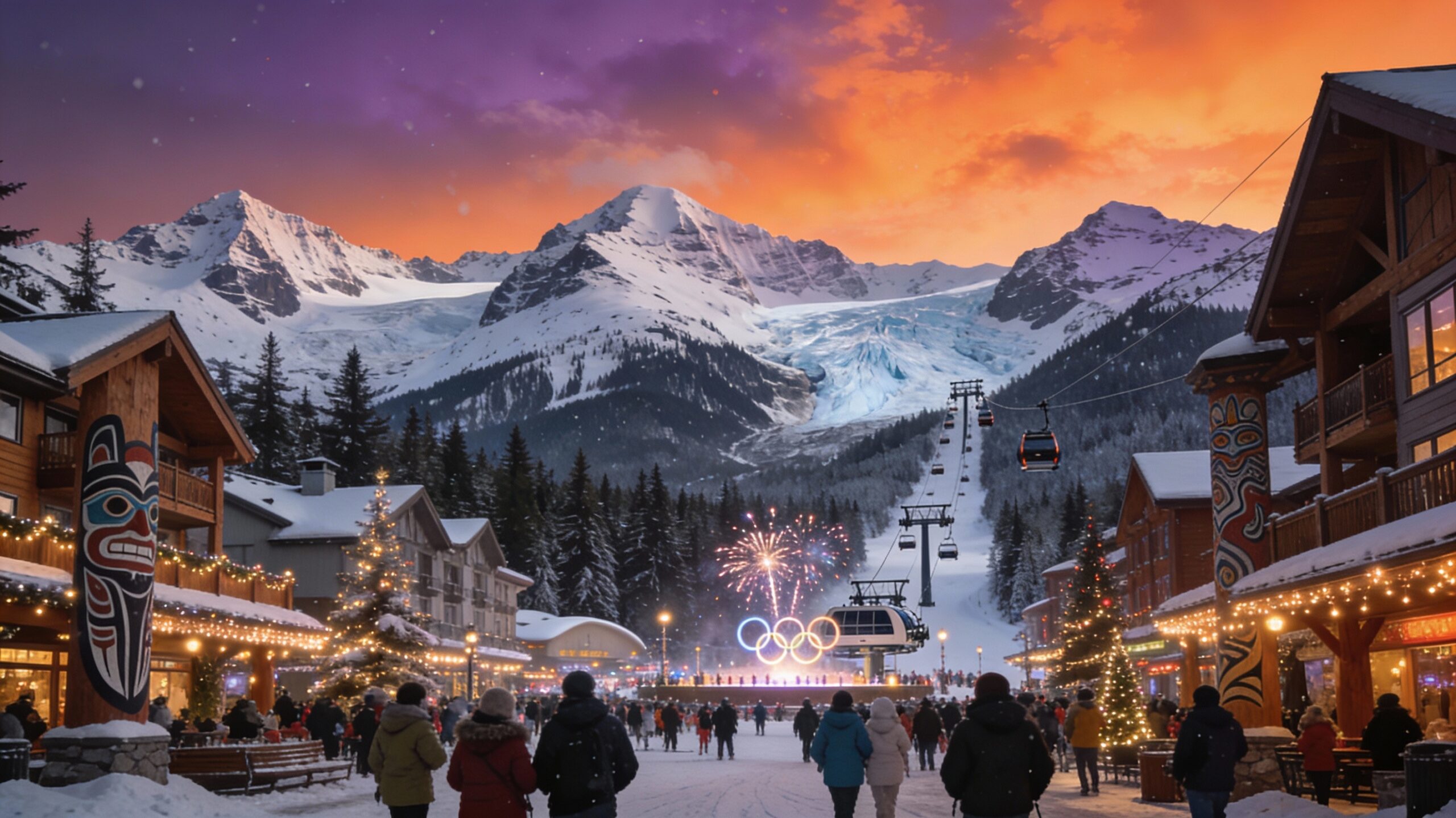
Whistler 2025 News: Housing, Tourism, Climate Change & the Future of the Resort
Whistler in 2025: A Mountain Community at a Crossroads
Whistler 2025 news,Whistler, British Columbia — long celebrated as one of the world’s premier mountain resort destinations — is entering a pivotal moment of transformation. As winter’s snow blankets the rugged Coast Mountains and holiday crowds return in full force, the resort municipality stands at the nexus of economic opportunity, social challenge, and environmental change. In late 2025, Whistler’s headlines aren’t defined by a single story, but by a constellation of developments shaping its future: housing policy breakthroughs, transit and infrastructure investments, tourism strategy shifts, community dynamics, and ecological pressures.

What unites these threads is a shared narrative: Whistler is redefining itself not just as a playground for global visitors, but as a living, breathing community — one that must balance global tourism with local sustainability, accessibility, and identity.
Housing Solutions for a Resort Workforce
Perhaps no issue has dominated community discourse in Whistler in recent years like housing affordability and availability. For decades, the resort’s popularity has driven demand for short-term visitor accommodation, inflating prices and squeezing local workers and families out of the market. The latest response comes from a collaborative housing initiative that aims to reverse that trend.
In October 2025, construction began on 125 new rental homes in the Cheakamus Crossing neighbourhood, a project intended to provide housing that local workers can actually afford. These units — mixed between studios, one-bedroom apartments, and townhomes — are being developed through BC Builds, a provincial government program, in partnership with BC Housing, the Resort Municipality of Whistler, and the Whistler Housing Authority. The investment includes roughly $6.3 million in grants and upwards of $48 million in financing, with completion targeted for late 2027. news.gov.bc.ca
“Housing is essential for the people who keep our communities strong and running,” said Christine Boyle, British Columbia’s Minister of Housing and Municipal Affairs, emphasizing that the project reflects a commitment to helping workers and their families remain part of Whistler’s social fabric. news.gov.bc.ca
This housing push builds on past efforts: Whistler’s employer-restricted housing stock now encompasses more than 7,300 beds dedicated to those who live and work locally, a remarkable figure for a resort town of roughly 15,625 permanent residents. Whistler Housing Authority+1
Yet even with these gains, the challenge is formidable. In 2024, permanent population dipped by 440 people, reflecting ongoing economic pressures and a surge in service-demand for social services within a municipality still wrestling with the tensions between long-term residents and seasonal employment trends. Whistler Community Services Society
Transit and Connectivity: Moving Beyond the Car
Whistler’s growth story cannot be told without discussing how people move around — whether residents heading to work, students attending school, or visitors navigating the village and mountains. The local transit narrative has seen meaningful progress in 2025.
In March, the federal government announced a $500,000 joint investment with the Resort Municipality of Whistler to boost transit infrastructure — bus shelters, lighting, benches, and other amenities — aimed at enhancing accessibility, safety, and comfort for riders year-round. Officials emphasized that higher transit use could reduce congestion and advance environmental goals like cutting greenhouse gas emissions. Canada
Meanwhile, the Province of British Columbia and BC Transit expanded bus service in Whistler with increased frequency and extended hours across several routes beginning in spring 2025, supported by provincial operating funding. news.gov.bc.ca
As Whistler transitions into peak winter season, adjustments to transit services — like the return of the free Marketplace shuttle and expanded staffing-housing routes — reflect a responsiveness to seasonal population surges and workforce patterns. BC Transit
These investments underscore a broader vision: integrate residents and visitors into a more connected, sustainable mobility network that relies less on private vehicles and more on frequent, reliable public transit.
Tourism and Economic Shifts: Diversification and Recognition
Tourism remains Whistler’s economic backbone, but the industry is evolving. Traditional winter sports and summer mountain biking coexist with deeper investments into cultural engagement and sustainability.
A standout story this year comes from Four Seasons Resort and Residences Whistler, which was recognized as the “World’s Leading Indigenous Community Tourism Initiative 2025” by the World Sustainable Travel & Hospitality Awards. The accolade highlights the resort’s long-standing collaborations with Squamish Lil’wat Cultural Centre and Skwálwen Botanicals, initiatives that immerse guests in Indigenous heritage and practices. Four Seasons Press Room
This recognition reflects a shifting tourism ethos: luxury and high-end hospitality increasingly intertwine with deep cultural respect and genuine community engagement, adding a layer of meaning to the visitor experience that goes beyond ski passes and gondola rides.
Meanwhile, the 2025 Invictus Games Vancouver Whistler — a landmark adaptive sport event held in February across both Vancouver and Whistler — delivered lasting community impact. The Games, which marked the first time adaptive winter sports featured in the Invictus movement, brought competitors and supporters from 23 nations to compete in events including Nordic skiing, alpine skiing, and wheelchair curling. The legacy of the event includes a $5 million investment in adaptive sport infrastructure and rehabilitation programs, as well as training opportunities for local volunteers and officials — creating social and economic dividends beyond the competition itself. invictusgames2025.ca
For Whistler’s tourism sector, such events broaden the narrative from seasonal vacation town to global destination with year-round cultural and sporting relevance.
Infrastructure and Mountain Operations: Evolving the Resort Experience
Whistler Blackcomb continues to invest in infrastructure that enables not just seasonal winter skiing but year-round mountain experiences. After decades of incremental improvements, attention has turned to addressing climate-related infrastructure challenges at high alpine terrain.
One of the most talked-about projects for upcoming seasons is the decision to replace the aging Showcase T-Bar with a new chairlift for the 2026–27 ski season. The T-Bar, historically a gateway to high alpine terrain on the upper Horstman Glacier, has become increasingly unreliable due to glacial recession and unstable ice. The new fixed-grip chairlift will run slightly farther north and off the receding glacier surface, creating more predictable, season-long operations for skiers and riders — a strategic shift in mountain engineering as climate change alters alpine landscapes. Powder Canada
While this isn’t the only upgrade Whistler Blackcomb has pursued — previous seasons saw high-speed lift installations and capacity increases across key terrain zones — the Showcase replacement underscores how environmental change is now a core consideration in resort planning. Whistler Blackcomb
Beyond winter, Whistler Blackcomb continues to animate its summer calendar with alpine offerings — from specialized adventure experiences to mountain bike park expansions — cementing its reputation as a four-season destination. Vail Resorts Newsroom
Community Fabric: Demographics, Pressures, and Identity
Beneath Whistler’s polished tourism image lies a community grappling with shifting demographic dynamics. The decline in permanent population pretends to belie underlying tensions between local residents, seasonal workers, and an economy that thrives on transient guests. Whistler Community Services Society
For many locals, this dynamic manifests in real challenges: housing scarcity, limited affordable rental options, and an overreliance on short-term rental markets that drive prices out of reach for people who work in essential services. Online community spaces often surface candid local perspectives: some note that Whistler’s charm is fading for those who once lived there full-time, replaced by a weekend-only feel due to affordability pressures and a tourism-centric housing market. Reddit
Organizations like the Whistler Valley Housing Society maintain a critical presence in this landscape, managing smaller affordable housing portfolios while advocating for broader systemic solutions to ensure no residents are left behind. Whistler Valley Housing Society
The contrast between Whistler’s high-end visitor experience and the daily lived realities of workers underscores a social tension common to many premium resort towns — where economic success must be matched with community sustainability.
Climate and Environmental Context: Adapting to Change
Whistler’s majestic mountains are both its greatest asset and its most vulnerable resource. As global temperatures rise, ski resorts worldwide confront lower snowlines, altered precipitation patterns, and shrinking glaciers — and Whistler is no exception. The decision to reroute lift infrastructure to avoid unstable glacial surfaces reflects this reality, not just as a competitive enhancement but as a survival strategy in an era of climate change. Powder Canada
Beyond ski lifts, broader environmental trends compel Whistler to rethink everything from water use to forest management to ecosystem resilience. Summer alpine skiing and glacier-park activities — once staples of adventurous itineraries — are becoming less predictable as ice recedes and terrain stability shifts.
These trends make sustainability initiatives more than ethical statements; they become central to Whistler’s future viability as a destination and community.
Social and Cultural Pulse: Life in the Village
Walk through Whistler Village on a December evening and you’ll experience both the vibrancy that draws global tourists and the quieter concerns of everyday living. Restaurants brim with seasonal staff and vacationers alike, while local events — from holiday markets to community craft fairs — bring residents together in ways that feel deeply human and uniquely Whistler.
But under that festive surface, there’s a nuanced conversation about Whistler’s culture. Some locals lament the town’s evolution into a tourism machine, describing it as a constellation of resorts and restaurants with fewer anchors to long-term community life. Others celebrate the diversity and economic opportunity that come with global tourism, pointing to increased infrastructure, transit access improvements, and international recognition as wins for everyone.
This blend of optimism and skepticism — the heartbeat of Whistler’s cultural pulse — captures a community that is at once proudly global and fiercely local.
Future Outlook: Balancing Global Status with Local Well-Being
Looking ahead, Whistler’s path is unlikely to be linear or simple. Instead, it will be shaped by how effectively it navigates four interconnected priorities:
1. Sustainable Tourism Growth. Diversifying offerings beyond peak ski seasons to include cultural festivals, adaptive sports legacies, and Indigenous engagement experiences will be crucial.
2. Community Sustainability. Housing projects like Cheakamus Crossing must continue expanding, alongside supportive social services, transit access improvements, and policies that keep workers living in town.
3. Climate Adaptation. From resilient lift infrastructure investments to sustainable transit initiatives aiming to reduce car dependence, Whistler must build for an uncertain environmental future.
4. Cultural Continuity. Balancing the needs of visitors with those of residents — preserving local identity while embracing global appeal — will define Whistler’s social legacy.
In late 2025, Whistler stands at a crossroads: a world-class resort facing the realities of climate change, housing challenges, and community sustainability, yet equipped with the will and ingenuity to adapt. Its challenge is not to slow progress, but to ensure that progress serves both its people and its promises.